Florida Reverse Sales Tax: Price Before Tax (2026)
Florida has a state sales tax rate of 6%. Use the calculator below to find the original price.
* Pre-filled with Florida state tax rate. You can adjust this if local taxes apply.
State Sales Tax
6.00%
Avg. Local Tax
1.05%
Combined Rate
7.05%


Expert Verified Tax Resource
CPA Reviewed Resource
Data Research Lead
Ritu Sharma
Tax Research Analyst specializing in global tax compliance and rate tracking.
View Credentials →Editorial Reviewer
Umesh Kant Sharma
Senior Revenue Technologist with over 15 years of financial systems expertise.
View Profile →Verified against official 2026 revenue schedules for Florida.
View StandardsUnderstanding Florida Sales Tax
Florida's sales tax applies to tangible personal property and certain services. For business owners, accountants, and individuals tracking expenses in Florida, the Reverse Sales Tax Calculator provides instant, accurate pre-tax price breakdowns. Whether you're reconciling a POS system, reviewing a restaurant receipt in Miami, or tracking business purchases in Orlando, this tool handles the calculation in seconds.
Why Reverse Calculation Matters in Florida
For tourists, Florida's sales tax is often encountered unexpectedly - particularly on rentals and services that may not be obvious. For residents, understanding the county-level surtax that applies to their county is essential for accurate budgeting and expense tracking. The reverse calculation method eliminates guesswork and provides exact numbers that can be used in accounting software, expense reports, and tax filings.
Sales Tax Rates in Major Florida Cities (Quick Look)
| City | Total Rate |
|---|---|
| Miami | 7.00% |
| Tampa | 8.50% |
| Orlando | 6.50% |
| Jacksonville | 7.50% |
General Taxability Guidelines
Detailed Tax Rates in Major Florida Cities
Detailed Taxability Rules & Exemptions in Florida
- Groceries (most food for home consumption) - exempt from Florida sales tax
- Prescription drugs - fully exempt
- Medical equipment prescribed by a licensed physician
- Residential rent - generally exempt (commercial rent is taxable)
- Agricultural equipment and certain farm supplies
- Baby diapers and baby and toddler clothing (as of 2023)
Real-World Reverse Calculation Example
You rented a car in Tampa for a week. The total bill came to $433.13, inclusive of Hillsborough County's 7.50% combined rate.
- Convert rate: 7.50% ÷ 100 = 0.075
- Add 1: 1 + 0.075 = 1.075
- Divide: $433.13 ÷ 1.075 = $402.91 (pre-tax rental cost)
- Tax: $433.13 − $402.91 = $30.22
- ✓ Rental cost before tax: $402.91 | Sales tax collected: $30.22
Florida Sales Tax Compliance & Filing
Official Citations & Sources
- Tax data sourced from the Florida Department of Revenue (FDOR), Sales and Use Tax section — Florida's 6% state rate is among the most straightforward in the Southeast.
- County discretionary surtax rates verified via FDOR's annually published Discretionary Sales Surtax Rate Table for 2026.
- Official Link: Florida Department of Revenue - Official Website
Frequently Asked Questions - Florida Sales Tax
📚 Related Tax Guides

Sales Tax Questions on Reddit: What People Really Ask (2026)
Reddit's small business and tax subreddits are full of sales tax questions, and a lot of the answers in the comments are wrong. This guide pulls the most common threads (nexus, marketplace sellers, the SALT deduction, audits) and answers each one the way a CPA actually would. Includes 2026 nexus thresholds, current state rates, and a reverse sales tax formula you can use today.
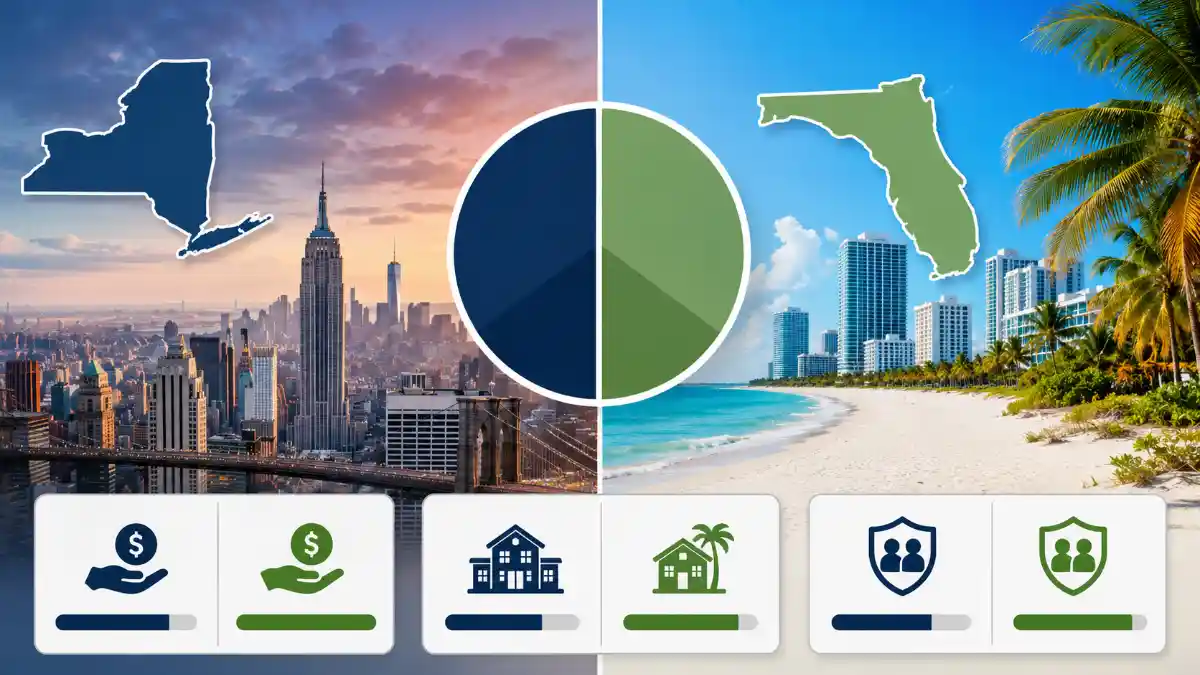
New York vs Florida: Income Tax, Effective Rates, and Take-Home Pay (2026)
New York City residents face the highest combined state-plus-local income tax rate in the United States in 2026 — up to 14.776% when New York State's 10.9% top rate and New York City's 3.876% local tax are combined. Florida charges exactly 0%, constitutionally prohibited from imposing an income tax. At $150,000 in income, a New York City resident owes approximately $14,300 in state and city income tax; a Florida resident owes $0. But the comparison doesn't end there — New York's estate tax, Florida's property insurance crisis, the 183-day statutory residency trap, and the convenience-of-the-employer rule all affect the real-world financial picture for anyone considering the move.

Moving to a No-Income-Tax State: Is It Actually Worth It?
Moving from California or New York to a no-income-tax state can save a high earner $25,000 or more per year — but the savings are rarely as clean as the headline suggests. Texas property taxes can run $10,000+ annually on a median home. Florida's homeowners insurance has hit $5,000–$8,000+ per year in coastal counties. Washington now taxes capital gains above $262,000 at 7% — and rates above $1 million at 9.9%. And your former state may still tax you for years if you don't establish domicile correctly. This guide models the real net savings at every income level, with every offsetting cost included.
Explore Other US States
Looking for a different jurisdiction? Compare calculators for other US states:
Check Other States
Legal Disclaimer: While we strive to maintain accurate and up-to-date tax rate information from reliable sources, tax rates can change frequently. Always verify current rates with your local tax authority or a qualified tax professional for official tax matters. This calculator is for informational purposes only and does not constitute professional tax, legal, or financial advice.