Illinois Reverse Sales Tax: Price Before Tax (2026)
Illinois has a state sales tax rate of 6.25%. Use the calculator below to find the original price.
* Pre-filled with Illinois state tax rate. You can adjust this if local taxes apply.
State Sales Tax
6.25%
Avg. Local Tax
2.59%
Combined Rate
8.84%


Expert Verified Tax Resource
CPA Reviewed Resource
Data Research Lead
Ritu Sharma
Tax Research Analyst specializing in global tax compliance and rate tracking.
View Credentials →Editorial Reviewer
Umesh Kant Sharma
Senior Revenue Technologist with over 15 years of financial systems expertise.
View Profile →Verified against official 2026 revenue schedules for Illinois.
View StandardsUnderstanding Illinois Sales Tax
Adding to the complexity, Illinois applies different rates to different categories of goods. Groceries are taxed at a reduced 1% state rate (plus applicable local rates). Qualifying food, drugs, and medical appliances face different treatment than general merchandise. For businesses, accountants, and consumers operating in Illinois, understanding which rate applies to which purchase - and then reverse-calculating the pre-tax amount - is an essential financial skill. The Illinois Reverse Sales Tax Calculator handles any rate you input, giving you an instant, accurate breakdown.
Why Reverse Calculation Matters in Illinois
For Illinois businesses, the Illinois Department of Revenue (IDOR) administers sales tax, but some home-rule cities - particularly Chicago - administer their own city-level taxes separately. This means Chicago businesses may need to file both state and city returns. Reverse calculation is critical for verifying that POS system totals match what should have been collected, and for reconciling books before filing.
Sales Tax Rates in Major Illinois Cities (Quick Look)
| City | Total Rate |
|---|---|
| Chicago | 10.25% |
| Aurora | 8.25% |
| Rockford | 8.75% |
General Taxability Guidelines
Detailed Tax Rates in Major Illinois Cities
Detailed Taxability Rules & Exemptions in Illinois
- Qualifying food (groceries) - taxed at reduced 1% state rate (local rates still apply)
- Prescription and over-the-counter drugs - taxed at reduced 1% state rate
- Medical and dental appliances - taxed at reduced 1% state rate
- Farm machinery and equipment used directly in agricultural production
- Manufacturing equipment used directly in the manufacturing process
- Sales to qualifying government agencies, schools, and religious organizations
Real-World Reverse Calculation Example
You bought a laptop in Chicago for a total of $1,127.50, inclusive of Chicago's 10.25% combined rate for general merchandise.
- Convert rate: 10.25% ÷ 100 = 0.1025
- Add 1: 1 + 0.1025 = 1.1025
- Divide: $1,127.50 ÷ 1.1025 = $1,022.60 (pre-tax price)
- Tax: $1,127.50 − $1,022.60 = $104.90
- ✓ Original price before tax: $1,022.60 | Illinois sales tax: $104.90
Illinois Sales Tax Compliance & Filing
Official Citations & Sources
- Tax data sourced from the Illinois Department of Revenue (IDOR), which administers one of the most layered sales tax structures in the country — state, county, municipal, and special district taxes all stack.
- Local rates verified through IDOR's Retailers' Occupation Tax Rate database and Chicago's own tax authority publications for 2026.
- Official Link: Illinois Department of Revenue - Official Website
Frequently Asked Questions - Illinois Sales Tax
📚 Related Tax Guides

Sales Tax Questions on Reddit: What People Really Ask (2026)
Reddit's small business and tax subreddits are full of sales tax questions, and a lot of the answers in the comments are wrong. This guide pulls the most common threads (nexus, marketplace sellers, the SALT deduction, audits) and answers each one the way a CPA actually would. Includes 2026 nexus thresholds, current state rates, and a reverse sales tax formula you can use today.
How State Income Tax Works, 2026
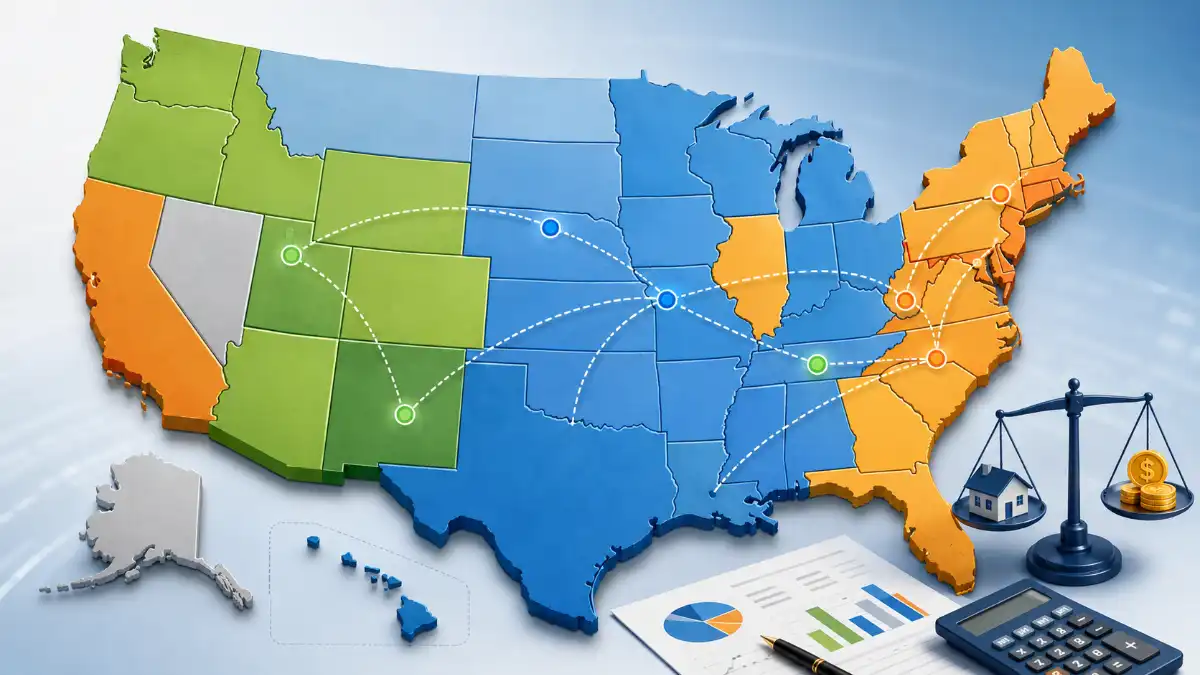
Unlike the federal system, state income tax isn't one set of rules — it's 41 different systems, each with its own rates, brackets, deductions, and residency rules. Nine states charge nothing at all, 15 use a single flat rate, and the rest use graduated brackets similar to (but never identical to) the federal structure. Add remote work, multi-state commuting, reciprocity agreements, and the "convenience of the employer" rule, and most people have no idea which state actually taxes their income — or how much. This guide explains the entire system from the ground up for 2026.
2026 State Tax Ranking: Biggest Movers
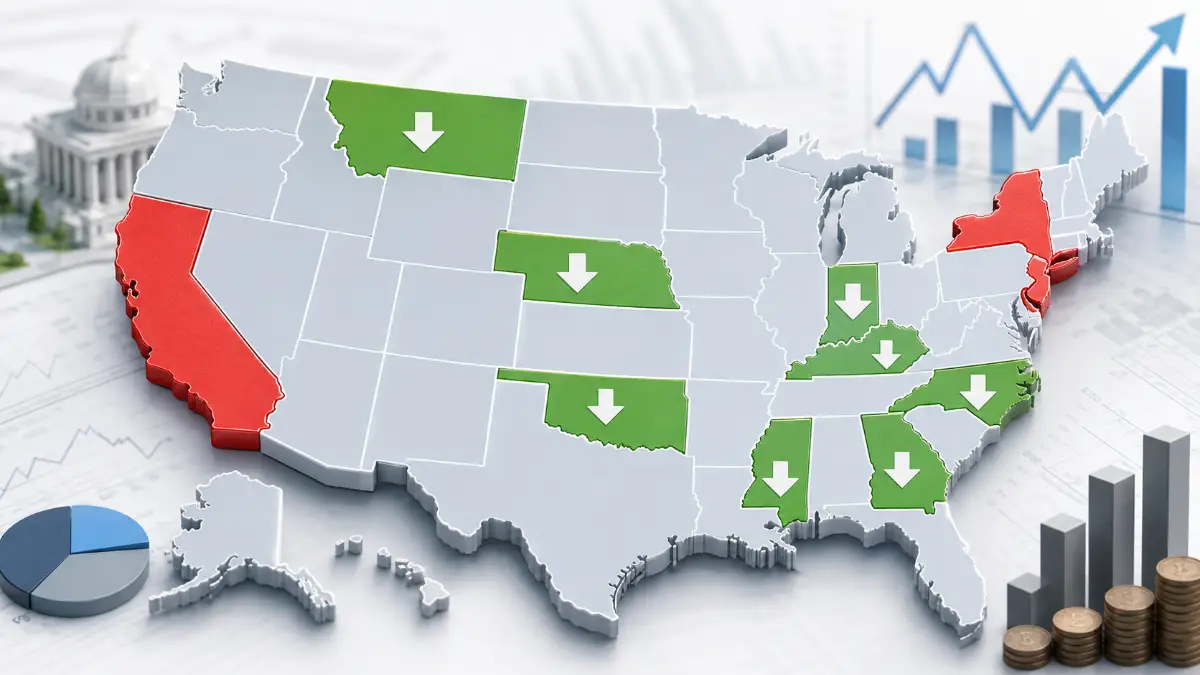
Nine states cut individual income tax rates effective January 1, 2026 — the largest wave of simultaneous state tax cuts in recent memory. Ohio converted to a flat 2.75% rate, completing its multi-year transition. North Carolina hit its long-targeted 3.99% flat rate. Kentucky dropped from 4.0% to 3.5%. Nebraska, Indiana, Mississippi, Georgia, Montana, and Oklahoma all cut rates too. Meanwhile California, New York, New Jersey, and Minnesota remain unchanged at the top of the chart. This guide ranks every mover, explains the mechanics behind each cut, and shows exactly what it means for a $120,000 earner choosing where to live.
Explore Other US States
Looking for a different jurisdiction? Compare calculators for other US states:
Check Other States
Legal Disclaimer: While we strive to maintain accurate and up-to-date tax rate information from reliable sources, tax rates can change frequently. Always verify current rates with your local tax authority or a qualified tax professional for official tax matters. This calculator is for informational purposes only and does not constitute professional tax, legal, or financial advice.