Maine Reverse Sales Tax: Price Before Tax (2026)
Maine has a state sales tax rate of 5.5%. Use the calculator below to find the original price.
* Pre-filled with Maine state tax rate. You can adjust this if local taxes apply.
State Sales Tax
5.50%
Avg. Local Tax
0.00%
Combined Rate
5.50%


Expert Verified Tax Resource
CPA Reviewed Resource
Data Research Lead
Ritu Sharma
Tax Research Analyst specializing in global tax compliance and rate tracking.
View Credentials →Editorial Reviewer
Umesh Kant Sharma
Senior Revenue Technologist with over 15 years of financial systems expertise.
View Profile →Verified against official 2026 revenue schedules for Maine.
View StandardsUnderstanding Maine Sales Tax
What makes Maine interesting from a sales tax perspective is not its rate complexity but its selective rate structure - Maine applies different rates to specific categories. The standard 5.50% applies to most tangible goods. But prepared food is taxed at 8.00%, lodging at 9.00%, and vehicle rentals at 10.00%. Understanding which rate applies to your specific purchase is important before performing a reverse calculation. The Maine Reverse Sales Tax Calculator works with any of these rates - simply enter the applicable percentage and the total paid.
Why Reverse Calculation Matters in Maine
For general retailers and consumers, Maine's 5.50% standard rate is competitive and straightforward. The reverse calculation is simple and produces consistent results statewide. Maine's sales tax laws were updated to include some digital goods and services, so businesses operating in Maine's growing digital economy should verify current taxability rules with the Maine Revenue Services.
Sales Tax Rates in Major Maine Cities (Quick Look)
| City | Total Rate |
|---|---|
| Portland | 5.50% |
| Lewiston | 5.50% |
General Taxability Guidelines
Detailed Tax Rates in Major Maine Cities
Detailed Taxability Rules & Exemptions in Maine
- Groceries (food for home consumption) - exempt from Maine sales tax
- Prescription drugs - fully exempt
- Agricultural feed, seeds, and equipment used in farming
- Fuel and electricity used in manufacturing or agriculture
- Casual sales (private individual-to-individual sales of most items)
- Sales to qualifying nonprofit organizations with valid exemption certificates
Real-World Reverse Calculation Example
You dined at a restaurant in Portland, Maine. Your bill came to $86.40, inclusive of Maine's 8.00% prepared food tax.
- Convert rate: 8.00% ÷ 100 = 0.08
- Add 1: 1 + 0.08 = 1.08
- Divide: $86.40 ÷ 1.08 = $80.00 (pre-tax food cost)
- Tax: $86.40 − $80.00 = $6.40
- ✓ Meal cost before tax: $80.00 | Maine prepared food tax (8.00%): $6.40
Maine Sales Tax Compliance & Filing
Official Citations & Sources
- Tax data sourced from the Maine Revenue Services (MRS), Sales, Fuel & Special Tax division — Maine has a single statewide rate with no local sales taxes.
- Rate verified through MRS's 2026 Sales and Use Tax Guide.
- Official Link: Maine Revenue Services - Official Website
Frequently Asked Questions - Maine Sales Tax
📚 Related Tax Guides

Is Social Security Taxable in 2026? Thresholds + Senior Deduction
Millions of retirees are surprised to discover their Social Security benefits are federally taxable. Whether yours are — and how much — depends on "provisional income," not your benefit amount alone. For 2026, the thresholds remain frozen at $25,000 and $34,000 for single filers (unchanged since the 1980s and 1990s), meaning more retirees enter taxable territory every year as COLA increases push income higher. The new OBBBA $6,000 senior deduction (available 2025–2028) can offset or eliminate the tax for many retirees earning below $75,000 ($150,000 MFJ). This guide explains the full formula, every threshold, and strategies to reduce the bite.
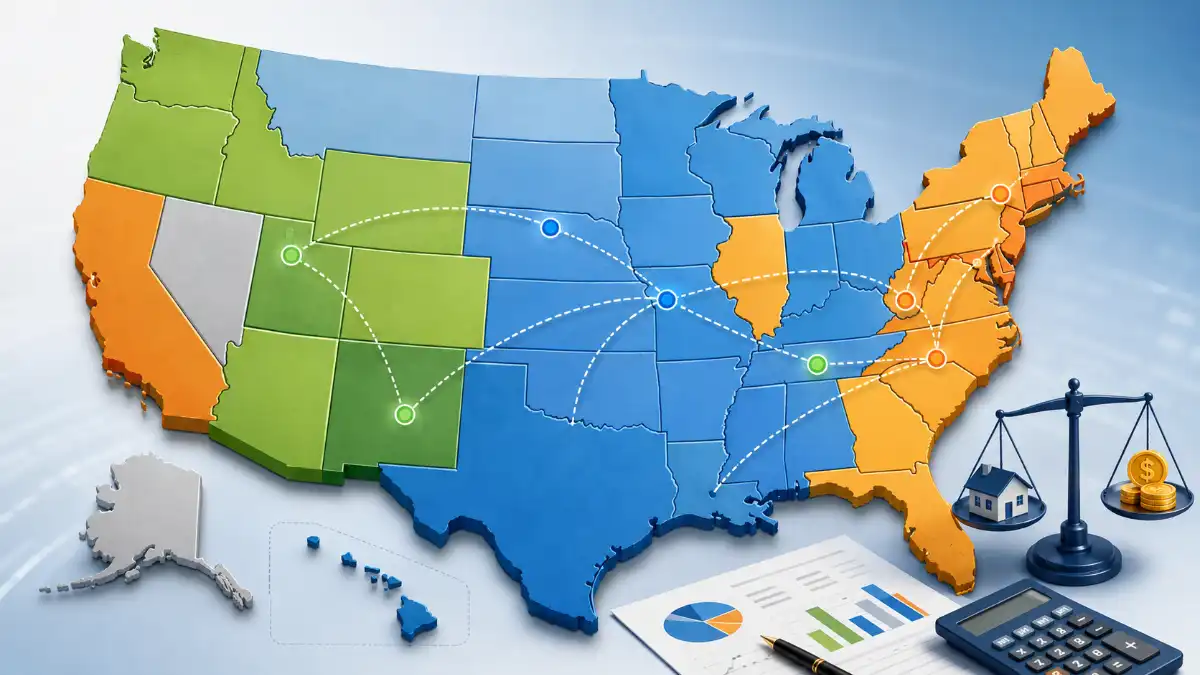
How State Income Tax Works, 2026
Unlike the federal system, state income tax isn't one set of rules — it's 41 different systems, each with its own rates, brackets, deductions, and residency rules. Nine states charge nothing at all, 15 use a single flat rate, and the rest use graduated brackets similar to (but never identical to) the federal structure. Add remote work, multi-state commuting, reciprocity agreements, and the "convenience of the employer" rule, and most people have no idea which state actually taxes their income — or how much. This guide explains the entire system from the ground up for 2026.
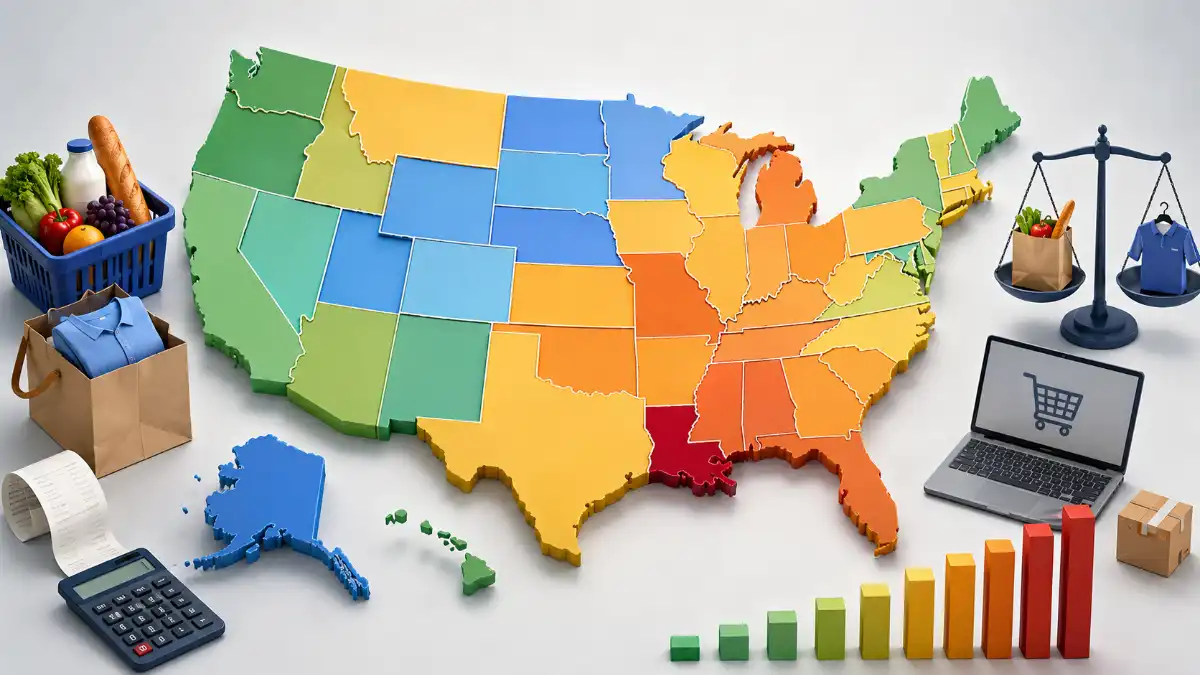
Sales Tax by State 2026: Combined Rates, Exemptions & What You Owe
Sales tax in the US ranges from 0% in Oregon and Delaware to over 10% in parts of Louisiana — and the gap between the lowest and highest combined rates can mean hundreds of dollars on a single large purchase. Louisiana raised its state rate to 5% in 2025, pushing its combined average past Tennessee to become the nation's highest. Five states have no sales tax at all, groceries are exempt in most states (Illinois just made its exemption permanent for 2026), and online purchases now almost always include tax thanks to post-Wayfair economic nexus rules. This guide covers every rate, every major exemption category, and exactly how to calculate what you owe.
Explore Other US States
Looking for a different jurisdiction? Compare calculators for other US states:
Check Other States
Legal Disclaimer: While we strive to maintain accurate and up-to-date tax rate information from reliable sources, tax rates can change frequently. Always verify current rates with your local tax authority or a qualified tax professional for official tax matters. This calculator is for informational purposes only and does not constitute professional tax, legal, or financial advice.