South Dakota Reverse Sales Tax: Price Before Tax (2026)
South Dakota has a state sales tax rate of 4.5%. Use the calculator below to find the original price.
* Pre-filled with South Dakota state tax rate. You can adjust this if local taxes apply.
State Sales Tax
4.50%
Avg. Local Tax
1.99%
Combined Rate
6.19%


Expert Verified Tax Resource
CPA Reviewed Resource
Data Research Lead
Ritu Sharma
Tax Research Analyst specializing in global tax compliance and rate tracking.
View Credentials →Editorial Reviewer
Umesh Kant Sharma
Senior Revenue Technologist with over 15 years of financial systems expertise.
View Profile →Verified against official 2026 revenue schedules for South Dakota.
View StandardsUnderstanding South Dakota Sales Tax
South Dakota levies a 4.50% state sales tax with local additions ranging from 0% to 2%, resulting in combined rates of 4.50% to 6.50% across the state. Sioux Falls, the state's largest city, has a combined rate of 6.50%. South Dakota has no personal income tax, making the sales tax a particularly important revenue source for the state. The South Dakota Reverse Sales Tax Calculator is a practical tool for any purchase in the Mount Rushmore State.
Why Reverse Calculation Matters in South Dakota
For South Dakota businesses and consumers, the practical day-to-day sales tax experience is relatively simple. The state rate is moderate at 4.50%, local additions are modest, and the compliance framework is straightforward. South Dakota also imposes a 4.50% contractors' excise tax on the value of construction work performed in the state - a separate but related tax that construction businesses must track alongside standard sales tax obligations.
Sales Tax Rates in Major South Dakota Cities (Quick Look)
| City | Total Rate |
|---|---|
| Sioux Falls | 6.50% |
| Rapid City | 6.50% |
General Taxability Guidelines
Detailed Tax Rates in Major South Dakota Cities
Detailed Taxability Rules & Exemptions in South Dakota
- Prescription drugs - fully exempt from South Dakota sales tax
- Farm machinery, equipment, and agricultural inputs used in production
- Certain medical devices and equipment
- Sales to qualifying government agencies
- Note: South Dakota taxes most groceries at the full rate - NO general food exemption
- Water sold through mains and pipes - exempt
Real-World Reverse Calculation Example
You bought a new refrigerator in Sioux Falls, South Dakota for a total of $1,036.75, inclusive of the 6.50% combined rate.
- Convert rate: 6.50% ÷ 100 = 0.065
- Add 1: 1 + 0.065 = 1.065
- Divide: $1,036.75 ÷ 1.065 = $973.47 (pre-tax price)
- Tax: $1,036.75 − $973.47 = $63.28
- ✓ Original price before tax: $973.47 | South Dakota sales tax: $63.28
South Dakota Sales Tax Compliance & Filing
Official Citations & Sources
- Tax data sourced from the South Dakota Department of Revenue (SDDOR), which administers the 4.5% state rate plus city and town sales taxes across the state.
- Local rates verified through SDDOR's 2026 Municipal Tax Rate Chart.
- Official Link: S.D. Department of Revenue - Official Website
Frequently Asked Questions - South Dakota Sales Tax
📚 Related Tax Guides

Sales Tax Questions on Reddit: What People Really Ask (2026)
Reddit's small business and tax subreddits are full of sales tax questions, and a lot of the answers in the comments are wrong. This guide pulls the most common threads (nexus, marketplace sellers, the SALT deduction, audits) and answers each one the way a CPA actually would. Includes 2026 nexus thresholds, current state rates, and a reverse sales tax formula you can use today.

Moving to a No-Income-Tax State: Is It Actually Worth It?
Moving from California or New York to a no-income-tax state can save a high earner $25,000 or more per year — but the savings are rarely as clean as the headline suggests. Texas property taxes can run $10,000+ annually on a median home. Florida's homeowners insurance has hit $5,000–$8,000+ per year in coastal counties. Washington now taxes capital gains above $262,000 at 7% — and rates above $1 million at 9.9%. And your former state may still tax you for years if you don't establish domicile correctly. This guide models the real net savings at every income level, with every offsetting cost included.
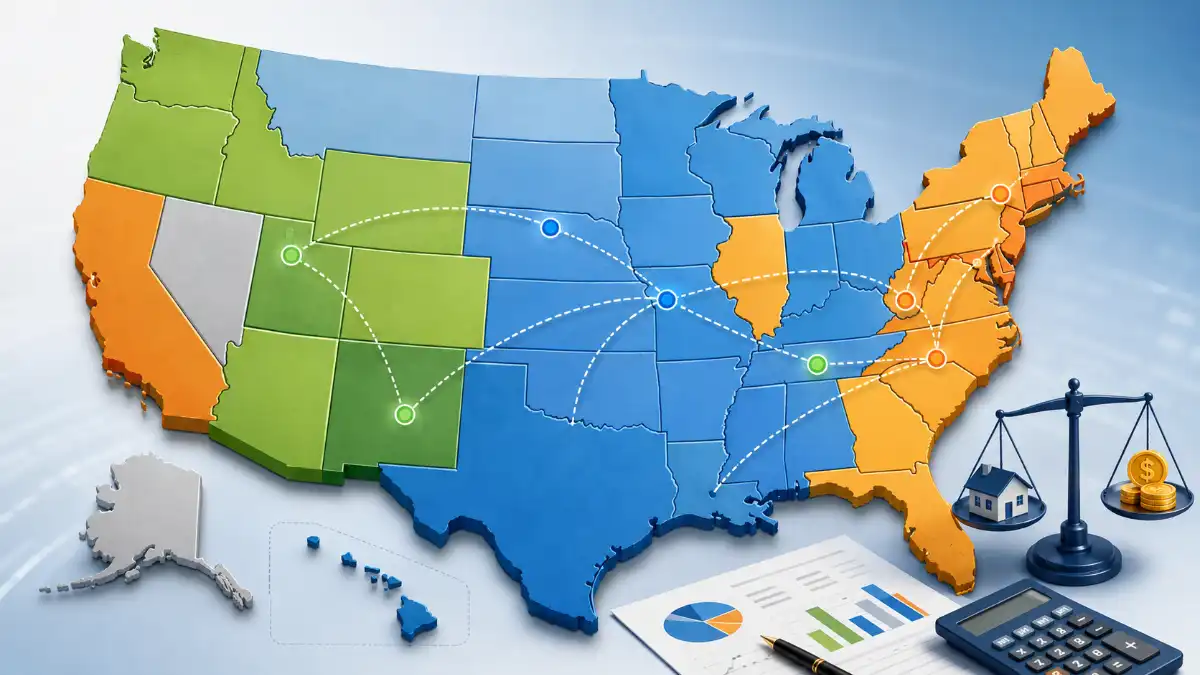
How State Income Tax Works, 2026
Unlike the federal system, state income tax isn't one set of rules — it's 41 different systems, each with its own rates, brackets, deductions, and residency rules. Nine states charge nothing at all, 15 use a single flat rate, and the rest use graduated brackets similar to (but never identical to) the federal structure. Add remote work, multi-state commuting, reciprocity agreements, and the "convenience of the employer" rule, and most people have no idea which state actually taxes their income — or how much. This guide explains the entire system from the ground up for 2026.
Explore Other US States
Looking for a different jurisdiction? Compare calculators for other US states:
Check Other States
Legal Disclaimer: While we strive to maintain accurate and up-to-date tax rate information from reliable sources, tax rates can change frequently. Always verify current rates with your local tax authority or a qualified tax professional for official tax matters. This calculator is for informational purposes only and does not constitute professional tax, legal, or financial advice.