Colorado Reverse Sales Tax: Price Before Tax (2026)
Colorado has a state sales tax rate of 2.9%. Use the calculator below to find the original price.
* Pre-filled with Colorado state tax rate. You can adjust this if local taxes apply.
State Sales Tax
2.90%
Avg. Local Tax
4.96%
Combined Rate
7.86%


Expert Verified Tax Resource
CPA Reviewed Resource
Data Research Lead
Ritu Sharma
Tax Research Analyst specializing in global tax compliance and rate tracking.
View Credentials →Editorial Reviewer
Umesh Kant Sharma
Senior Revenue Technologist with over 15 years of financial systems expertise.
View Profile →Verified against official 2026 revenue schedules for Colorado.
View StandardsUnderstanding Colorado Sales Tax
For anyone doing business in Colorado - or simply trying to understand a receipt - the Colorado Reverse Sales Tax Calculator is indispensable. The sheer number of jurisdictions makes mental math unreliable. The only way to know your exact pre-tax price is to enter the total and the applicable combined rate for your specific address.
Why Reverse Calculation Matters in Colorado
For expense reporting and accounting purposes, Colorado purchasers must know the precise combined rate for each transaction location. A purchase made at a Denver retailer is taxed differently than the same purchase made in Lakewood, even though the two cities border each other. This variation makes reverse calculation a critical tool for bookkeepers and CFOs managing Colorado operations.
Sales Tax Rates in Major Colorado Cities (Quick Look)
| City | Total Rate |
|---|---|
| Denver | 8.81% |
| Colorado Springs | 8.20% |
General Taxability Guidelines
Detailed Tax Rates in Major Colorado Cities
Detailed Taxability Rules & Exemptions in Colorado
- Grocery food (unprepared food for home consumption) - exempt from state tax
- Prescription drugs - fully exempt
- Farm equipment, irrigation equipment, and agricultural chemicals
- Manufacturing equipment used directly in production
- Residential energy (gas and electricity for home use) - exempt from state tax
- Sales to qualifying religious, charitable, and nonprofit organizations with valid exemption certificates
Real-World Reverse Calculation Example
You dined at a restaurant in Denver and your bill came to $87.28 total, inclusive of Denver's combined rate of 8.81%.
- Convert rate: 8.81% ÷ 100 = 0.0881
- Add 1: 1 + 0.0881 = 1.0881
- Divide: $87.28 ÷ 1.0881 = $80.21 (pre-tax total)
- Tax: $87.28 − $80.21 = $7.07
- ✓ Meal cost before tax: $80.21 | Total tax collected: $7.07
Colorado Sales Tax Compliance & Filing
Official Citations & Sources
- Tax data sourced from the Colorado Department of Revenue (CDOR), Taxation Division — Colorado operates one of the most complex home-rule city tax systems in the US.
- Local rates verified through CDOR's DR 1002 Sales Tax Rates publication and individual home-rule city ordinances for 2026.
- Official Link: Colorado Department of Revenue - Official Website
Frequently Asked Questions - Colorado Sales Tax
📚 Related Tax Guides
2026 State Tax Ranking: Biggest Movers
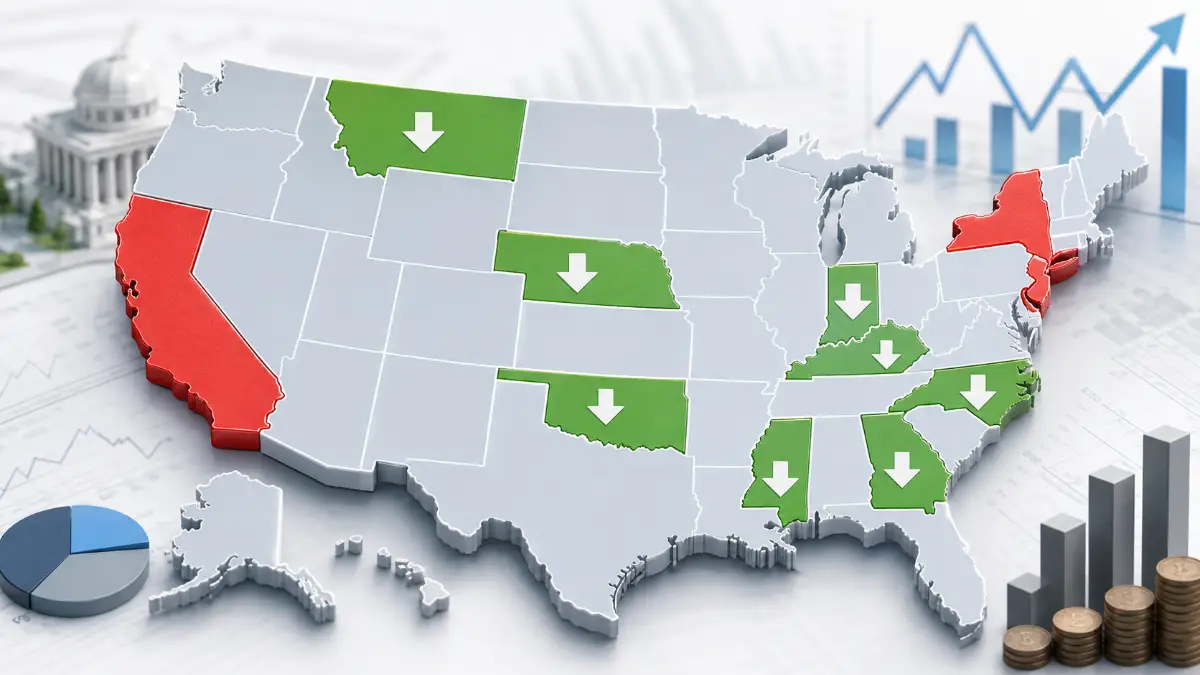
Nine states cut individual income tax rates effective January 1, 2026 — the largest wave of simultaneous state tax cuts in recent memory. Ohio converted to a flat 2.75% rate, completing its multi-year transition. North Carolina hit its long-targeted 3.99% flat rate. Kentucky dropped from 4.0% to 3.5%. Nebraska, Indiana, Mississippi, Georgia, Montana, and Oklahoma all cut rates too. Meanwhile California, New York, New Jersey, and Minnesota remain unchanged at the top of the chart. This guide ranks every mover, explains the mechanics behind each cut, and shows exactly what it means for a $120,000 earner choosing where to live.
Sales Tax by State 2026: Combined Rates, Exemptions & What You Owe
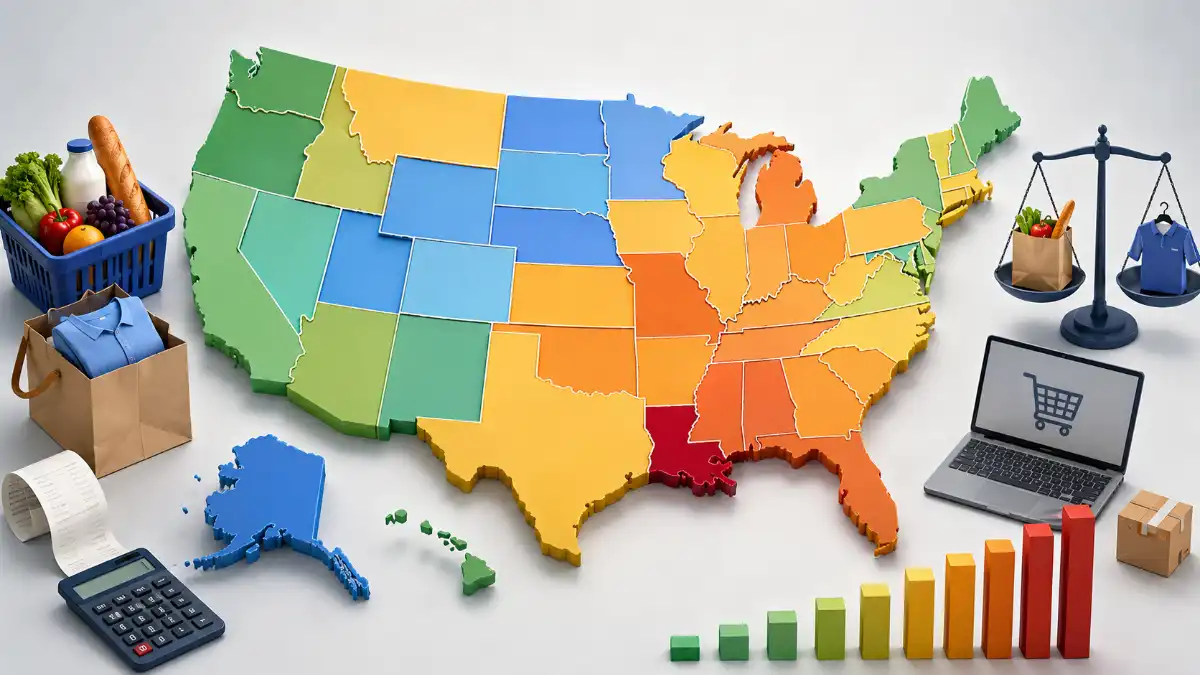
Sales tax in the US ranges from 0% in Oregon and Delaware to over 10% in parts of Louisiana — and the gap between the lowest and highest combined rates can mean hundreds of dollars on a single large purchase. Louisiana raised its state rate to 5% in 2025, pushing its combined average past Tennessee to become the nation's highest. Five states have no sales tax at all, groceries are exempt in most states (Illinois just made its exemption permanent for 2026), and online purchases now almost always include tax thanks to post-Wayfair economic nexus rules. This guide covers every rate, every major exemption category, and exactly how to calculate what you owe.

RSU Multi-State Allocation Explained: Workday Fraction Method
If you lived in California for two years of a four-year RSU grant then moved to Texas, California will still tax 50% of every share that vests — even though you are no longer a California resident. This is the workday fraction method, and it applies differently in every state you worked in during the grant-to-vest period. This guide explains the formula, the California FTB Publication 1004 rules, New York's 14-day threshold, a full state-by-state grid, and every common mistake that turns a relocation into a tax surprise.
Explore Other US States
Looking for a different jurisdiction? Compare calculators for other US states:
Check Other States
Legal Disclaimer: While we strive to maintain accurate and up-to-date tax rate information from reliable sources, tax rates can change frequently. Always verify current rates with your local tax authority or a qualified tax professional for official tax matters. This calculator is for informational purposes only and does not constitute professional tax, legal, or financial advice.