Wisconsin Reverse Sales Tax: Price Before Tax (2026)
Wisconsin has a state sales tax rate of 5%. Use the calculator below to find the original price.
* Pre-filled with Wisconsin state tax rate. You can adjust this if local taxes apply.
State Sales Tax
5.00%
Avg. Local Tax
0.64%
Combined Rate
5.64%


Source-Checked Tax Resource
Editorial Quality Standard
Data Research Lead
Ritu Sharma
Tax Research Analyst (M.Com, Accounts & Law) focused on rate tracking and editorial review.
View Credentials →Editorial Reviewer
Umesh Kant Sharma
Senior Revenue Technologist with 13 years of revenue and business experience.
View Profile →Verified against official 2026 revenue schedules for Wisconsin.
View StandardsUnderstanding Wisconsin Sales Tax
Wisconsin's moderate combined rate and relatively clear exemption structure make it one of the more manageable states for sales tax compliance in the Midwest. The Badger State's manufacturing sector benefits from significant production-related exemptions, while consumers benefit from meaningful food and medication exemptions. The Wisconsin Reverse Sales Tax Calculator delivers instant, precise pre-tax breakdowns for any Wisconsin transaction at any applicable rate.
Why Reverse Calculation Matters in Wisconsin
For retail businesses and consumers, Wisconsin's straightforward rate structure simplifies compliance considerably. The primary variable is whether the optional county 0.50% tax applies in your specific county - the vast majority of Wisconsin residents live in counties that have adopted it, making 5.50% the de facto standard combined rate for most of the state.
Sales Tax Rates in Major Wisconsin Cities (Quick Look)
| City | Total Rate |
|---|---|
| Milwaukee | 7.90% |
| Madison | 5.50% |
General Taxability Guidelines
Detailed Tax Rates in Major Wisconsin Cities
Detailed Taxability Rules & Exemptions in Wisconsin
- Groceries (food and food ingredients for home consumption) - exempt
- Prescription drugs - fully exempt from Wisconsin sales tax
- Manufacturing machinery and equipment used directly in production
- Agricultural seeds, plants, feed, and equipment used in farming
- Residential utilities (electricity and gas for residential use)
- Sales to qualifying government agencies and nonprofit organizations
Real-World Reverse Calculation Example
You purchased office equipment in Milwaukee, Wisconsin for a total of $770.55, inclusive of the 5.50% combined rate.
- Convert rate: 5.50% ÷ 100 = 0.055
- Add 1: 1 + 0.055 = 1.055
- Divide: $770.55 ÷ 1.055 = $730.38 (pre-tax price)
- Tax: $770.55 − $730.38 = $40.17
- ✓ Original price before tax: $730.38 | Wisconsin sales tax: $40.17
Wisconsin Sales Tax Compliance & Filing
Official Citations & Sources
- Tax data sourced from the Wisconsin Department of Revenue (WDOR), which administers the 5% state rate plus county sales taxes adopted by most Wisconsin counties.
- County rates verified through WDOR's 2026 Publication 201 — Wisconsin Sales and Use Tax Information.
- Official Link: Wisconsin Department of Revenue - Official Website
Frequently Asked Questions - Wisconsin Sales Tax
📚 Related Tax Guides
Sales Tax by State 2026: Combined Rates, Exemptions & What You Owe
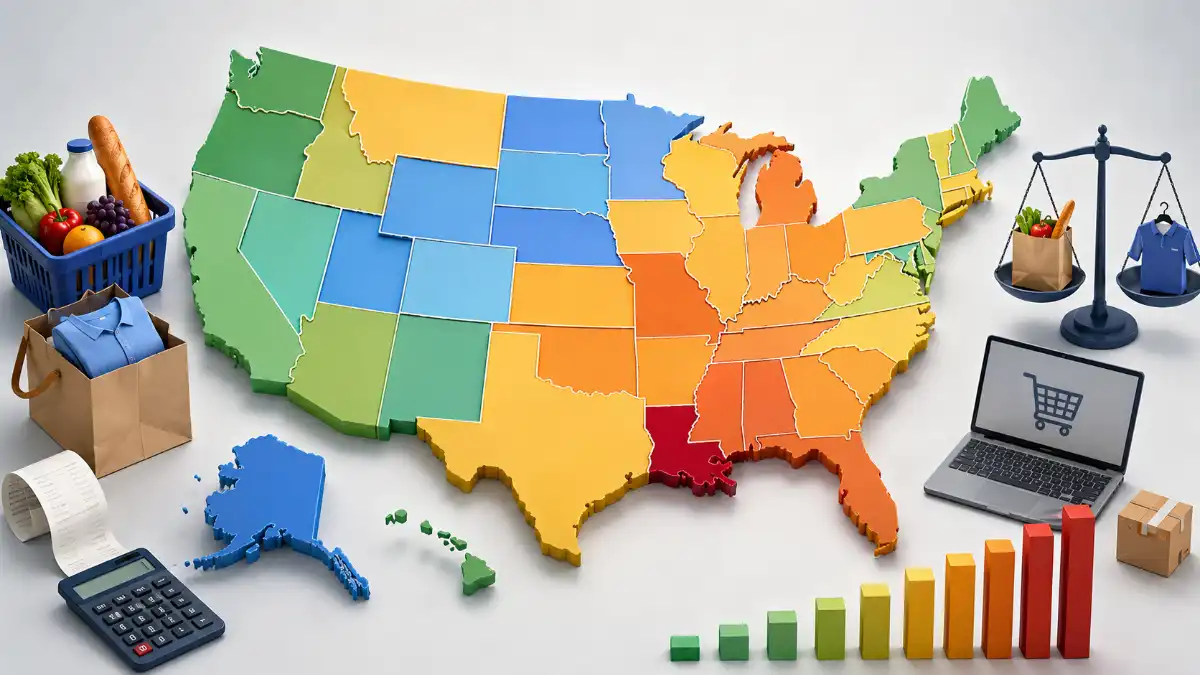
Sales tax in the US ranges from 0% in Oregon and Delaware to over 10% in parts of Louisiana — and the gap between the lowest and highest combined rates can mean hundreds of dollars on a single large purchase. Louisiana raised its state rate to 5% in 2025, pushing its combined average past Tennessee to become the nation's highest. Five states have no sales tax at all, groceries are exempt in most states (Illinois just made its exemption permanent for 2026), and online purchases now almost always include tax thanks to post-Wayfair economic nexus rules. This guide covers every rate, every major exemption category, and exactly how to calculate what you owe.

Sales Tax on Services: Which States Tax Services? (2026)
Most states do not tax services by default — but 4 states tax almost all services, and every state taxes at least some. A haircut is taxable in Washington but not in Ohio. Lawn care is taxable in most states but not in Indiana under 2026 rules. This guide explains exactly what you pay.

Sales Tax on Pet Food, Vet Bills & Pet Supplies (2026)
Vet exam fees are tax-free in most states. Pet food is taxable almost everywhere — unlike human food. Prescription veterinary diets are exempt in Florida and some others. Grooming is taxable in Texas, Iowa, and Kansas. This complete guide covers every pet-related tax rule.
Explore Other US States
Looking for a different jurisdiction? Compare calculators for other US states:
Check Other States
Legal Disclaimer: While we strive to maintain accurate and up-to-date tax rate information from reliable sources, tax rates can change frequently. Always verify current rates with your local tax authority or a qualified tax professional for official tax matters. This calculator is for informational purposes only and does not constitute professional tax, legal, or financial advice.