Rhode Island Reverse Sales Tax: Price Before Tax (2026)
Rhode Island has a state sales tax rate of 7%. Use the calculator below to find the original price.
* Pre-filled with Rhode Island state tax rate. You can adjust this if local taxes apply.
State Sales Tax
7.00%
Avg. Local Tax
0.00%
Combined Rate
7.00%


Source-Checked Tax Resource
Editorial Quality Standard
Data Research Lead
Ritu Sharma
Tax Research Analyst (M.Com, Accounts & Law) focused on rate tracking and editorial review.
View Credentials →Editorial Reviewer
Umesh Kant Sharma
Senior Revenue Technologist with 13 years of revenue and business experience.
View Profile →Verified against official 2026 revenue schedules for Rhode Island.
View StandardsUnderstanding Rhode Island Sales Tax
At 7.00%, Rhode Island's rate is the joint-highest uniform state rate in the country, tied with Indiana, Mississippi, and Tennessee. It applies to a well-defined base of tangible personal property and selected services. Rhode Island has maintained this 7.00% rate for many years, though policymakers periodically debate whether reducing it would stimulate economic activity given the state's competitive position relative to neighboring Massachusetts (6.25%) and Connecticut (6.35%).
Why Reverse Calculation Matters in Rhode Island
For businesses operating in Rhode Island, the flat 7.00% rate simplifies compliance considerably - one rate, statewide, for all locations. The primary compliance challenge is correctly identifying taxable versus exempt transactions, particularly as Rhode Island has expanded its tax base to include some services and digital products in recent years. Reverse calculation in Rhode Island is clean and consistent: any Rhode Island purchase uses 7.00%.
Sales Tax Rates in Major Rhode Island Cities (Quick Look)
| City | Total Rate |
|---|---|
| Providence | 7.00% |
| Warwick | 7.00% |
General Taxability Guidelines
Detailed Tax Rates in Major Rhode Island Cities
Detailed Taxability Rules & Exemptions in Rhode Island
- Groceries (food and food ingredients for home consumption) - exempt
- Prescription drugs - fully exempt from Rhode Island sales tax
- Agricultural inputs (seeds, feed, fertilizer, farm equipment)
- Certain manufacturing equipment and machinery used in production
- Sales to qualifying nonprofit organizations and government agencies
- Clothing and footwear under $250 per item - exempt from Rhode Island sales tax
Real-World Reverse Calculation Example
You purchased a new laptop in Providence, Rhode Island for a total of $1,069.99, inclusive of Rhode Island's 7.00% sales tax.
- Convert rate: 7.00% ÷ 100 = 0.07
- Add 1: 1 + 0.07 = 1.07
- Divide: $1,069.99 ÷ 1.07 = $999.99 (pre-tax price)
- Tax: $1,069.99 − $999.99 = $70.00
- ✓ Original price before tax: $999.99 | Rhode Island sales tax: $70.00
Rhode Island Sales Tax Compliance & Filing
Official Citations & Sources
- Tax data sourced from the Rhode Island Division of Taxation, which administers a single flat 7% statewide rate with no local sales taxes — among the simplest structures in New England.
- Rate confirmed through RI Division of Taxation's 2026 Sales and Use Tax Regulations.
- Official Link: R.I. Division of Taxation - Official Website
Frequently Asked Questions - Rhode Island Sales Tax
📚 Related Tax Guides
Sales Tax by State 2026: Combined Rates, Exemptions & What You Owe
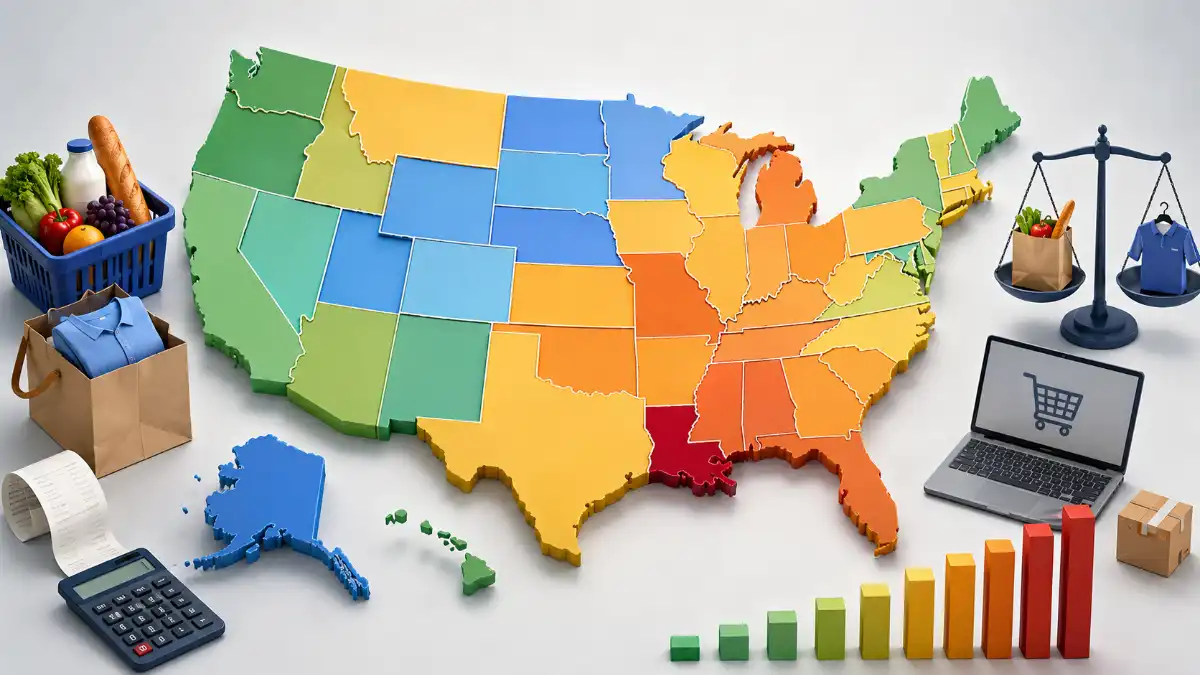
Sales tax in the US ranges from 0% in Oregon and Delaware to over 10% in parts of Louisiana — and the gap between the lowest and highest combined rates can mean hundreds of dollars on a single large purchase. Louisiana raised its state rate to 5% in 2025, pushing its combined average past Tennessee to become the nation's highest. Five states have no sales tax at all, groceries are exempt in most states (Illinois just made its exemption permanent for 2026), and online purchases now almost always include tax thanks to post-Wayfair economic nexus rules. This guide covers every rate, every major exemption category, and exactly how to calculate what you owe.

Sales Tax on Uber, Lyft & DoorDash for Riders & Drivers (2026)
Uber collects sales tax on rides in some states — not others. DoorDash collects sales tax on food, not on delivery fees in most states. Drivers pay 15.3% self-employment tax on net earnings. The 2026 "No Tax on Tips" deduction can save drivers thousands. This guide covers it all.

Sales Tax on Clothing by State (2026)
Pennsylvania exempts almost all clothing. New York exempts clothing under $110. Massachusetts exempts clothing under $175. Most states fully tax clothing. This complete 2026 guide covers every state's clothing tax rules — including what accessories are always taxable.
Explore Other US States
Looking for a different jurisdiction? Compare calculators for other US states:
Check Other States
Legal Disclaimer: While we strive to maintain accurate and up-to-date tax rate information from reliable sources, tax rates can change frequently. Always verify current rates with your local tax authority or a qualified tax professional for official tax matters. This calculator is for informational purposes only and does not constitute professional tax, legal, or financial advice.