Minnesota Reverse Sales Tax: Price Before Tax (2026)
Minnesota has a state sales tax rate of 6.875%. Use the calculator below to find the original price.
* Pre-filled with Minnesota state tax rate. You can adjust this if local taxes apply.
State Sales Tax
6.88%
Avg. Local Tax
0.70%
Combined Rate
7.58%


Source-Checked Tax Resource
Editorial Quality Standard
Data Research Lead
Ritu Sharma
Tax Research Analyst (M.Com, Accounts & Law) focused on rate tracking and editorial review.
View Credentials →Editorial Reviewer
Umesh Kant Sharma
Senior Revenue Technologist with 13 years of revenue and business experience.
View Profile →Verified against official 2026 revenue schedules for Minnesota.
View StandardsUnderstanding Minnesota Sales Tax
Minnesota's sales tax system has several distinctive features that set it apart from neighboring states. The state has one of the most comprehensive food exemptions in the country - extending the exemption to candy, dietary supplements, and even some traditionally taxable snack foods in ways that other states do not. At the same time, Minnesota taxes clothing (with an exemption for most everyday wear), making its clothing tax rules particularly nuanced. The Minnesota Reverse Sales Tax Calculator is an essential tool for accurately determining the pre-tax price of any Minnesota purchase, given the state's layered rate structure and category-specific tax rules.
Why Reverse Calculation Matters in Minnesota
Minnesota also has robust use tax enforcement and requires consumers who purchase taxable goods out of state without paying sales tax to self-report and pay Minnesota use tax. For businesses, this means out-of-state purchases of equipment, supplies, or materials that were not taxed at the point of purchase may still generate a Minnesota use tax obligation at 6.875%.
Sales Tax Rates in Major Minnesota Cities (Quick Look)
| City | Total Rate |
|---|---|
| Minneapolis | 8.03% |
| Saint Paul | 7.88% |
General Taxability Guidelines
Detailed Tax Rates in Major Minnesota Cities
Detailed Taxability Rules & Exemptions in Minnesota
- Most food for home consumption - exempt (including candy and dietary supplements in many cases)
- Prescription drugs - fully exempt
- Clothing (most everyday apparel) - exempt from Minnesota sales tax
- Farm machinery, equipment, and agricultural inputs
- Manufacturing production equipment used directly in production
- Sales to qualifying nonprofit and government organizations
Real-World Reverse Calculation Example
You purchased a laptop in Minneapolis, Minnesota for a total of $1,080.27, inclusive of the 8.025% combined rate.
- Convert rate: 8.025% ÷ 100 = 0.08025
- Add 1: 1 + 0.08025 = 1.08025
- Divide: $1,080.27 ÷ 1.08025 = $1,000.02 (pre-tax price)
- Tax: $1,080.27 − $1,000.02 = $80.25
- ✓ Original price before tax: $1,000.02 | Minnesota sales tax: $80.25
Minnesota Sales Tax Compliance & Filing
Official Citations & Sources
- Tax data sourced from the Minnesota Department of Revenue (MNDOR), which oversees the 6.875% state rate plus city and county local sales taxes approved by the state legislature.
- Local rates verified through MNDOR's 2026 Local Sales Tax Rate Chart.
- Official Link: Minnesota Department of Revenue - Official Website
Frequently Asked Questions - Minnesota Sales Tax
📚 Related Tax Guides

Does Nevada Have Sales Tax? Rates, Exemptions, and Local Rules (2026)
Yes — Nevada has sales tax, starting at a state base rate of 6.85%. But what you actually pay depends on where in Nevada you are. Las Vegas (Clark County) adds local levies that push the total to 8.375%. Reno (Washoe County) reaches 8.265%. Rural counties can be as low as 6.85%. Groceries sold for home consumption are exempt. Clothing is taxable. Prescription drugs are exempt. Prepared food and restaurant meals are taxed at the full rate. If you're a tourist, a resident, or a business selling into Nevada, this guide answers every Nevada sales tax question with 2026 rates and worked examples.
Sales Tax by State 2026: Combined Rates, Exemptions & What You Owe
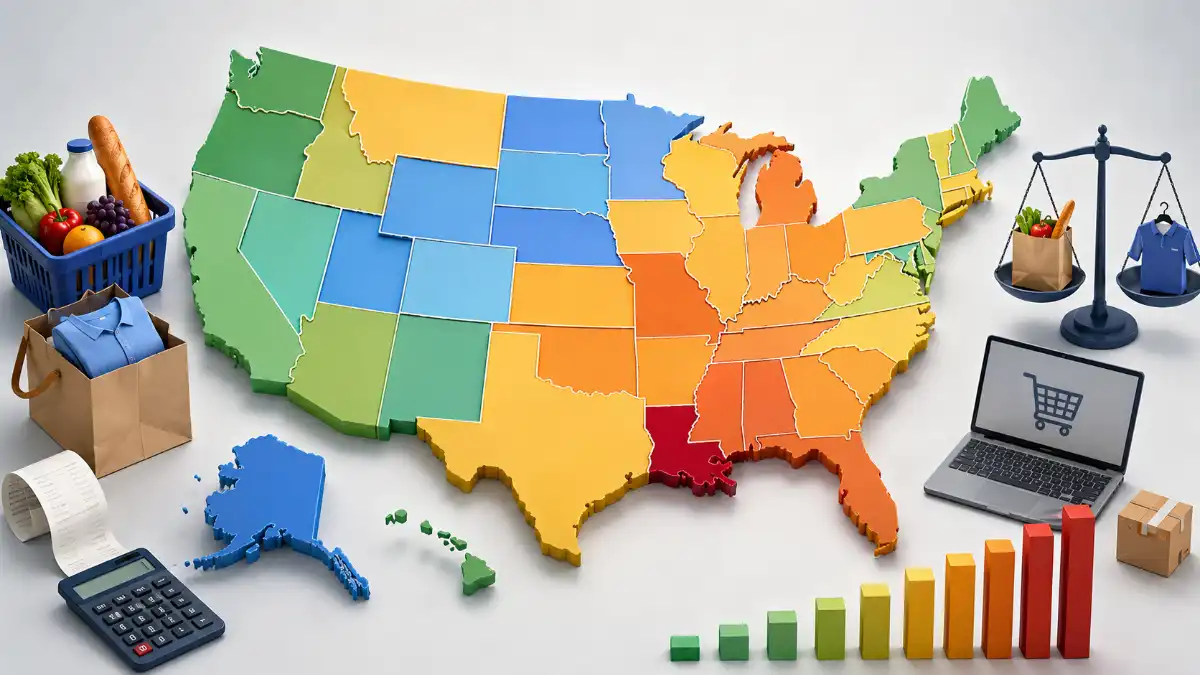
Sales tax in the US ranges from 0% in Oregon and Delaware to over 10% in parts of Louisiana — and the gap between the lowest and highest combined rates can mean hundreds of dollars on a single large purchase. Louisiana raised its state rate to 5% in 2025, pushing its combined average past Tennessee to become the nation's highest. Five states have no sales tax at all, groceries are exempt in most states (Illinois just made its exemption permanent for 2026), and online purchases now almost always include tax thanks to post-Wayfair economic nexus rules. This guide covers every rate, every major exemption category, and exactly how to calculate what you owe.

Sales Tax on Services: Which States Tax Services? (2026)
Most states do not tax services by default — but 4 states tax almost all services, and every state taxes at least some. A haircut is taxable in Washington but not in Ohio. Lawn care is taxable in most states but not in Indiana under 2026 rules. This guide explains exactly what you pay.
Explore Other US States
Looking for a different jurisdiction? Compare calculators for other US states:
Check Other States
Legal Disclaimer: While we strive to maintain accurate and up-to-date tax rate information from reliable sources, tax rates can change frequently. Always verify current rates with your local tax authority or a qualified tax professional for official tax matters. This calculator is for informational purposes only and does not constitute professional tax, legal, or financial advice.