Australia Reverse Tax Calculator (2026) - GST & Sales Tax
Need to remove GST from a total in Australia? Use our free 10% reverse GST calculator to instantly extract tax and find the exact original price before tax.
The standard GST rate for Australia is pre-filled. You can adjust this manually if needed.
Standard Rate
10.00%
Alternative Rate
10%
Combined Rate
10.00%


Source-Checked Tax Resource
Editorial Quality Standard
Data Research Lead
Ritu Sharma
Tax Research Analyst (M.Com, Accounts & Law) focused on rate tracking and editorial review.
View Credentials →Editorial Reviewer
Umesh Kant Sharma
Senior Revenue Technologist with 13 years of revenue and business experience.
View Profile →Verified against official 2026 revenue schedules for Australia.
View StandardsUnderstanding Australia's Tax System
Australia introduced GST on July 1, 2000, replacing a complex system of wholesale sales taxes. The GST was one of the most significant tax reforms in Australian history and was introduced by the Howard government after years of political debate. At 10%, Australia's GST rate is one of the lowest among OECD countries, reflecting the political sensitivity around consumption taxes in Australia and the ongoing exemptions for food, healthcare, and education.
Why Reverse Tax Calculation Matters in Australia
For businesses registered for GST, every purchase and sale requires GST identification. Input tax credits (ITCs) allow businesses to recover the GST they paid on business purchases through their Business Activity Statement (BAS). The ATO is rigorous in its GST audit activities, particularly around property transactions, cash-based businesses, and the sharing economy.
Australia Tax Rate Categories
Real-World Reverse Tax Calculation Example
You purchased office equipment in Sydney, Australia for AUD $2,750 (including 10% GST).
- Convert GST rate: 10% ÷ 100 = 0.10
- Add 1: 1 + 0.10 = 1.10
- Divide: AUD $2,750 ÷ 1.10 = AUD $2,500.00 (pre-GST price)
- GST: AUD $2,750 − AUD $2,500 = AUD $250.00
- ✓ Pre-GST price: AUD $2,500.00 | GST (10%): AUD $250.00 | Total: AUD $2,750.00
Australia Tax Compliance & Registration
Official Citations & Sources
- Information formatted according to the official Australian Taxation Office (ATO) guidelines.
- GST rates verified for 2026 Australian tax periods.
- Official Link: ATO — GST Information
Frequently Asked Questions — Australia
📚 Related Tax Guides
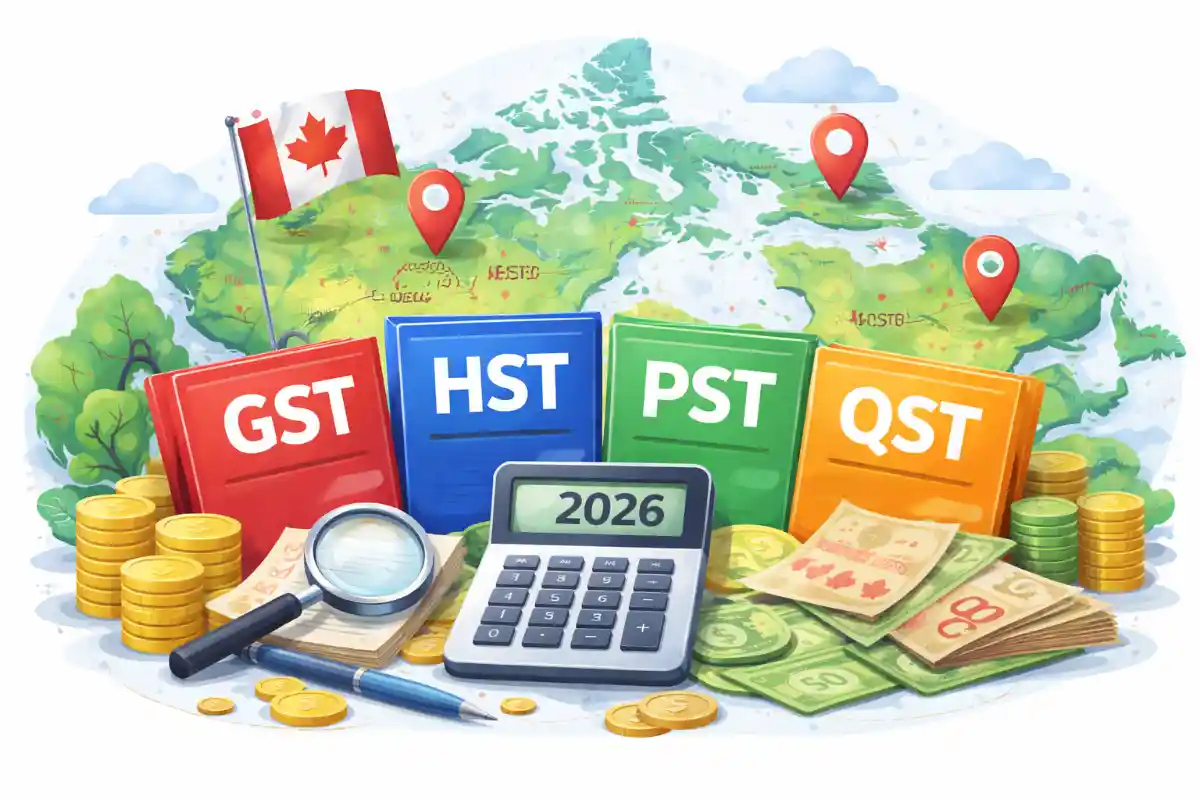
Canada GST vs HST: Complete Guide
GST, HST, PST, QST — Canada uses four different consumption taxes depending on the province. This complete guide explains exactly how each works, which provinces use which system, and how to reverse-calculate any Canadian tax total in 2026.

Sales Tax for Amazon & eBay Sellers
Amazon and eBay handle tax collection on marketplace sales — but FBA inventory nexus, your own website, and international VAT remain your responsibility. Here is exactly what you need to know in 2026.
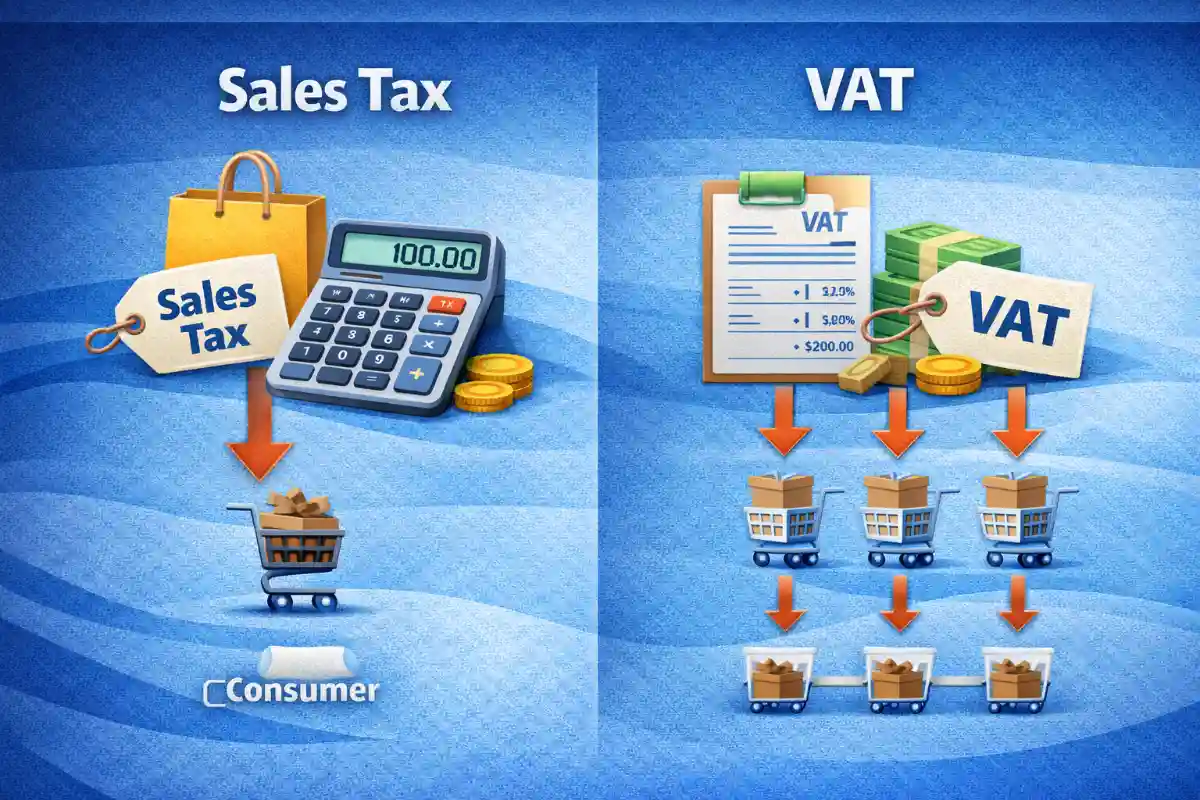
Sales Tax vs VAT: Key Differences Explained
Confused about the difference between Sales Tax and Value Added Tax (VAT)? We break down the key distinctions.
Understanding Different Tax Jurisdictions
Looking for a different jurisdiction? Compare calculators for other global regions:
Saskatchewan
11.00%
Yukon
5.00%
United Kingdom
20.00%
Newfoundland and Labrador
15.00%
Manitoba
12.00%
Quebec
14.98%
United States Tax Structure
Explore individual calculators and detailed tax rates for all 50 US states.
Other World Tax Rates
Legal Disclaimer: While we strive to maintain accurate and up-to-date tax rate information from reliable sources, tax rates can change frequently. Always verify current rates with your local tax authority or a qualified tax professional for official tax matters. This calculator is for informational purposes only and does not constitute professional tax, legal, or financial advice.