

The Basic Rule — Prescription vs OTC
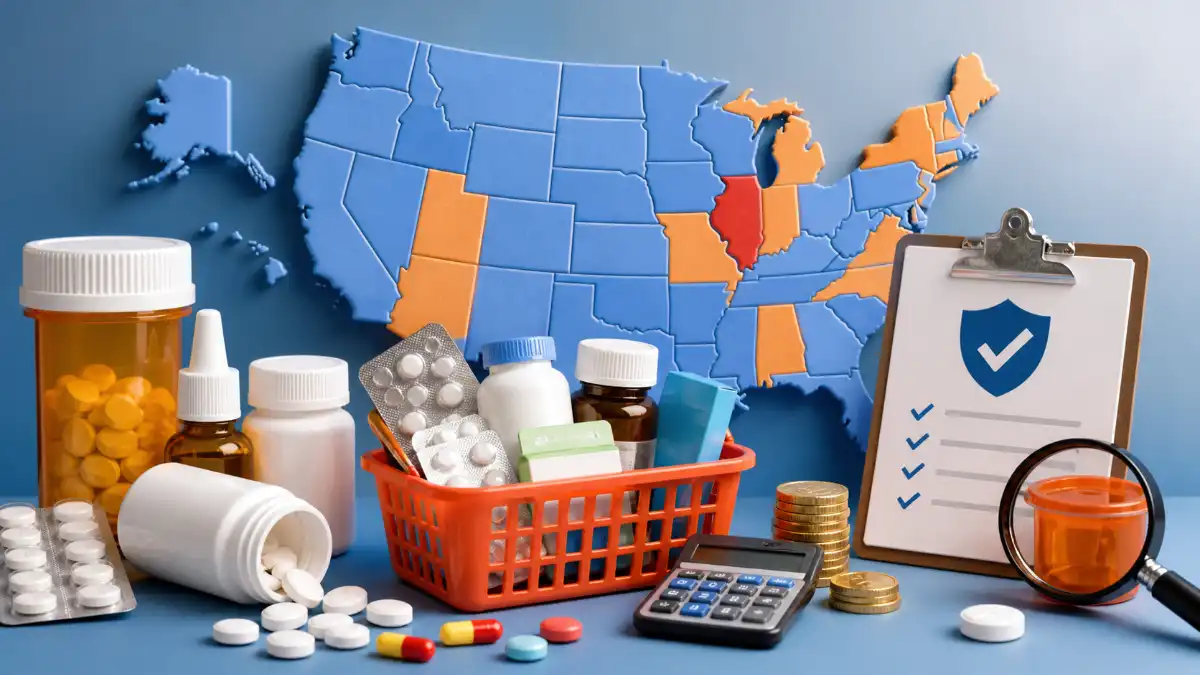
The core distinction in drug sales tax is simple: prescription drugs are almost universally exempt from sales tax across the US, while over-the-counter medications are taxable in most states. This reflects a longstanding policy judgment that prescription medications — which require a licensed healthcare provider's authorization and are prescribed for specific medical treatment — are essential healthcare products that should not be subject to consumption taxes. OTC medications, which can be purchased by anyone without a doctor's involvement, have not received the same universal exemption treatment, though 9 states plus DC have chosen to exempt them as well.
The practical result is that a consumer paying for a prescription at the pharmacy counter pays zero sales tax on the medication in 44 states. Walking over to the OTC aisle and picking up an equivalent over-the-counter product — aspirin, ibuprofen, acetaminophen, antihistamines — the same consumer pays the full combined state and local sales tax rate in most states. At a combined rate of 9%, a $15 bottle of OTC cold medicine generates $1.35 in sales tax. Over a year of typical household OTC drug spending (approximately $442 per average household annually according to CHPA data), that adds up to approximately $39.78 in sales tax on medications that in 9 states would cost nothing in tax.
Key Highlights
- Prescription drugs are exempt from sales tax in 44 of 45 states — Illinois is the only exception at a reduced 1% rate.
- OTC medications are taxable in 41 states at the full combined rate.
- 9 states plus DC exempt OTC medications: CT, FL, MD, MN, NJ, NY, PA, TX, VT, VA, and DC.
- Texas exempts OTC drugs only if the package has an FDA "Drug Facts" panel — products without it are taxable even if medicinal.
- Illinois taxes both prescription drugs (1%) and OTC medications (1%) at a reduced rate — unique among all states.
- Georgia exempts prescription drugs but taxes OTC medications even if purchased with a doctor's prescription — unique rule.
- Louisiana exempts prescriptions at the state level but many parishes (counties) impose local sales tax on prescription drugs.
- Insulin is exempt in all 50 states — typically even without a prescription in most states.
- Dietary supplements are NOT drugs for tax purposes in most states — generally taxable even in states that exempt medications.
- Getting a prescription for an OTC medication converts it to tax-exempt in most states — except Georgia.
Three Categories — How States Treat Drug Sales Tax
Every state's drug sales tax rules fall into one of three categories. Knowing your state's category for both prescription and OTC drugs is the starting point for understanding what you should pay at the pharmacy or drugstore.
| Category | Prescription Drugs | OTC Medications | States |
|---|---|---|---|
| Full exemption for both | Exempt — $0 tax | Exempt — $0 tax | CT, FL, MD, MN, NJ, NY, PA, TX, VT, VA, DC (and NOMAD no-tax states) |
| Rx exempt, OTC taxable | Exempt — $0 tax | Taxable at full rate | CA, CO, AZ, AR, IN, KY, LA (state level), MI, MO, NC, OH, TN, WA, and most others |
| Both taxable (reduced rate) | Taxable at 1% | Taxable at 1% | Illinois only |
Texas has one of the most practical and consumer-friendly OTC drug exemption rules in the US — and one of the most precisely defined. Under Texas law, OTC drugs and medicines are exempt from sales tax if the package is labeled with a "Drug Facts" panel in accordance with FDA regulations. This means almost every standard OTC medication from a major manufacturer — aspirin, ibuprofen, acetaminophen, antihistamines, antacids, cough syrup, eye drops — qualifies for the exemption because FDA-regulated OTC drug manufacturers are required to include the Drug Facts panel on qualifying products. If a product claims medicinal benefits but does not have the FDA Drug Facts panel — such as some homeopathic products or dietary supplements — it is taxable in Texas unless a doctor prescribes it. The practical check: look for the "Drug Facts" box on the back or side of the package. If it is there, it is exempt in Texas. If the package only shows a "Supplement Facts" panel, it is a supplement — not a drug — and is taxable.
Reverse Formula — Verify Your Pharmacy or Drugstore Receipt
When your pharmacy or drugstore receipt contains both exempt prescription items, potentially exempt OTC medications, and other taxable items (cosmetics, personal care products, food), the reverse formula identifies whether the correct items were taxed.
Example: You buy at a Texas pharmacy: prescription medication $45.00 (exempt), ibuprofen with Drug Facts panel $8.99 (exempt in Texas), lip balm with Drug Facts $4.99 (exempt in TX), shampoo $6.99 (taxable), snack bar $2.49 (taxable). Combined rate 8.25%. Expected tax: ($6.99 + $2.49) × 8.25% = $9.48 × 8.25% = $0.78. If the receipt shows $1.54 in tax, divide: $1.54 ÷ 0.0825 = $18.67 — implying some exempt drug items were incorrectly taxed.
Step-by-Step: Determining If Your Medication Is Tax-Exempt
Reverse Sales Tax Calculator
Global Reverse Tax Tool (VAT & GST) 2026 — Remove tax from any total and calculate the original price in seconds.
Real-World Drug Tax Scenarios
Scenario 1: Standard Pharmacy Visit — Most States (Rx Exempt, OTC Taxable)
Situation
A California shopper visits a pharmacy. They pick up: antibiotic prescription $25.00 (dispensed by pharmacist), ibuprofen 200mg OTC $9.99, antacid tablets $7.49, shampoo $8.99. California combined rate in their county: 9.50%.
California rules: Prescription drugs = exempt. OTC drugs = taxable at full rate. Shampoo = taxable.
Taxable items: Ibuprofen $9.99 + Antacid $7.49 + Shampoo $8.99 = $26.47
Tax owed: $26.47 × 9.50% = $2.51
Prescription antibiotic: $0 tax ✓
Reverse check: $2.51 ÷ 0.095 = $26.42 ≈ $26.47 ✓ (rounding)
Annual OTC tax impact: Average household spends ~$442/year on OTC meds. At California's 9.50% average rate: $442 × 9.50% = $41.99 per year in OTC drug sales tax.
Scenario 2: Texas — Drug Facts Panel Makes All the Difference
Situation
A Texas shopper buys: ibuprofen (has Drug Facts panel) $8.49, melatonin sleep supplement (shows Supplement Facts, not Drug Facts) $14.99, vitamin C supplement $12.99, prescription allergy medication $0 copay (exempt). Texas combined rate: 8.25%.
Texas Drug Facts rule: OTC drugs with Drug Facts panel = exempt. Supplements with Supplement Facts = taxable food/supplement.
Ibuprofen: Has Drug Facts panel → Exempt. Tax = $0.
Melatonin: Shows Supplement Facts → taxable supplement. $14.99 × 8.25% = $1.24
Vitamin C: Shows Supplement Facts → taxable supplement. $12.99 × 8.25% = $1.07
Total tax: $1.24 + $1.07 = $2.31
Key lesson: In Texas, the label panel type determines taxability. Drug Facts = drug (exempt). Supplement Facts = supplement (taxable). The consumer can check this by looking at the back of the package before purchasing.
Scenario 3: Illinois — Both Rx and OTC Taxed at Reduced 1% Rate
Situation
An Illinois shopper in Chicago buys: prescription blood pressure medication $15.00, OTC aspirin $5.99, cosmetic face cream $18.99. Chicago combined rate: 10.25%. Illinois drug rate: 1% (state) — local tax does not apply to drugs in Illinois.
Illinois unique rule: Both prescription AND OTC drugs are taxed at the state 1% rate only. Local/county taxes do NOT apply to drugs. Cosmetics and personal care at full rate.
Prescription medication: $15.00 × 1% = $0.15
Aspirin: $5.99 × 1% = $0.06
Face cream (cosmetic): $18.99 × 10.25% = $1.95
Total tax: $0.15 + $0.06 + $1.95 = $2.16
Reverse check — drugs only: ($0.15 + $0.06) ÷ 0.01 = $21.00 ≈ $15.00 + $5.99 = $20.99 ✓
vs California for same items: CA prescription $0 tax, CA aspirin $5.99 × 9.50% = $0.57, CA face cream $18.99 × 9.50% = $1.80. Total CA tax: $2.37 — surprisingly similar to Illinois despite very different approaches.
Scenario 4: Louisiana — State Exempt but Parish Tax Applies
Situation
A Louisiana shopper in a parish that charges local sales tax on prescription drugs fills a prescription for $80.00. Louisiana state rate: 5% (but prescriptions are state-exempt). Local parish rate: 4.45% (and this parish has NOT exempted prescriptions locally). Combined rate: 9.45%.
Louisiana prescription drug rule: State-level exemption applies — no state tax. But many Louisiana parishes impose their own local sales tax on prescription drugs independently of the state exemption.
State tax on prescription: $0 (state exemption)
Parish tax on prescription: $80.00 × 4.45% = $3.56
Total prescription tax: $3.56 — paid only to the parish, not the state
Key lesson: Louisiana shoppers cannot assume their prescription is tax-free just because Louisiana has a state exemption. The specific parish where they fill the prescription determines whether local tax applies. Pharmacies in parishes with local prescription drug taxes will charge this amount — it is correct and legally required, even though confusing.
Complete State Drug Tax Guide (2026)
The table below shows the prescription and OTC medication sales tax status for every US state as of April 2026.
| State | Prescription Drugs | OTC Medications | Key Note |
|---|---|---|---|
| Alabama | Exempt | Taxable | Prescription vitamins/supplements also exempt if prescribed. Seniors 65+ get local tax exemption too. |
| Alaska | No state tax | No state tax | No statewide sales tax. Local jurisdictions vary — Anchorage specifically exempts prescription drugs locally. |
| Arizona | Exempt | Taxable | Insulin and diabetic supplies always exempt. Prescribed OTC converts to exempt. |
| Arkansas | Exempt | Taxable (without Rx) / Exempt (with Rx) | Insulin exempt always. OTC becomes exempt if prescribed by doctor. |
| California | Exempt | Taxable | Full state + local rate on OTC. Insulin and glucose test strips generally exempt. |
| Colorado | Exempt | Taxable | Insulin always exempt. Prescribed OTC converts to exempt. |
| Connecticut | Exempt | Exempt (broad list) | Broad OTC exemption including vitamins, supplements, analgesics, antacids, cold medicines, eye/ear/nose drops. Cosmetics taxable. |
| Delaware | No state tax | No state tax | No sales tax on anything. |
| Florida | Exempt | Exempt (broad list) | Extensive OTC exemption list including aspirin, antacids, eye drops, sleep aids, bandages, skin medications, sinus relievers. |
| Georgia | Exempt | Taxable — even with prescription | Unique rule: OTC drugs are taxable in Georgia even if a doctor writes a prescription for them. Aspirin, ibuprofen, cold remedies all taxable. |
| Hawaii | Exempt (direct patient sales) | Taxable | GET (General Excise Tax) applies to most sales. Prescriptions exempt when sold directly to patients; hospital purchases may be taxable. |
| Idaho | Exempt | Taxable | Standard state rate on OTC. Prescribed OTC converts to exempt. |
| Illinois | Taxable at 1% (state only) | Taxable at 1% (state only) | Only state taxing prescriptions. Both Rx and OTC taxed at reduced 1% state rate. Local taxes do NOT apply to drugs in Illinois. |
| Indiana | Exempt | Taxable | Standard 7% rate on OTC. Prescribed OTC converts to exempt. |
| Iowa | Exempt | Taxable | OTC taxable at full rate. Prescribed OTC may convert to exempt. |
| Kansas | Exempt | Taxable | Standard rate on OTC. Insulin and prescription drugs exempt. |
| Kentucky | Exempt | Taxable | 6% standard rate on OTC. Prescribed OTC converts to exempt. |
| Louisiana | Exempt (state) / May be taxable (parish) | Taxable | State exempts prescriptions. Many parishes impose local tax on prescriptions independently. Highly variable by location. |
| Maryland | Exempt | Exempt | Both Rx and OTC exempt. No local sales tax in Maryland. |
| Massachusetts | Exempt | Taxable | OTC taxable at 6.25%. No local sales tax additions in Massachusetts. |
| Michigan | Exempt | Taxable | 6% flat rate on OTC. Prescribed OTC converts to exempt. |
| Minnesota | Exempt | Exempt | Both Rx and OTC exempt. Note: MinnesotaCare Tax applies to wholesale distributors of Legend (Rx) drugs — not passed to consumers. |
| Mississippi | Exempt | Taxable | 5% rate on OTC. Insulin exempt. |
| Missouri | Exempt | Taxable | Standard rate on OTC. Prescribed OTC converts to exempt in most cases. |
| Montana | No state tax | No state tax | No sales tax on anything. |
| Nebraska | Exempt | Taxable — even with prescription | Like Georgia, OTC drugs are taxable even with a prescription in Nebraska. All OTC medications taxable at standard rate. |
| Nevada | Exempt | Taxable | Standard combined rate on OTC. Prescribed OTC converts to exempt. |
| New Hampshire | No state tax | No state tax | No sales tax on anything. |
| New Jersey | Exempt | Exempt | Broad OTC exemption. No local sales tax in NJ on drugs. |
| New Mexico | Exempt | Taxable | GRT (Gross Receipts Tax) applies to OTC. Prescribed OTC may convert. |
| New York | Exempt | Exempt | OTC exemption broad — antacids to cold medicine. Cosmetics and personal hygiene products taxable. Dandruff shampoos and sunscreen (SPF 2+) exempt. |
| North Carolina | Exempt | Taxable | Standard rate on OTC. Prescribed OTC converts to exempt. |
| Ohio | Exempt | Taxable — even with prescription | Ohio taxes OTC medications even when prescribed by a doctor. Similar to Georgia and Nebraska. |
| Oklahoma | Exempt | Taxable — even with prescription | OTC medications taxable in Oklahoma regardless of prescription status. |
| Oregon | No state tax | No state tax | No sales tax on anything. |
| Pennsylvania | Exempt | Exempt (broad list) | Broad exemption includes nonprescription drugs, medical supplies, some toiletries (toothpaste, toothbrush, sunburn treatments, colostomy supplies). |
| Rhode Island | Exempt | Taxable | Standard rate on OTC. Prescribed OTC converts to exempt. |
| South Carolina | Exempt (direct patient sales) | Exempt (with exceptions) | Prescriptions exempt when sold directly to patients. Hospital bulk drug purchases may be taxable. OTC to health clinics providing free care is exempt. |
| South Dakota | Exempt | Taxable | Standard 4.2% (temporary rate) on OTC. Prescribed OTC converts to exempt. |
| Tennessee | Exempt | Taxable | 7% state + local on OTC. Some nonprofits providing OTC to needy may be exempt. |
| Texas | Exempt | Exempt if Drug Facts panel present | FDA Drug Facts panel required for OTC exemption. Supplements (Supplement Facts panel) are taxable. One of the most specific OTC exemption definitions in the US. |
| Utah | Exempt | Taxable | Standard combined rate on OTC. Prescribed OTC converts to exempt. |
| Vermont | Exempt | Exempt | Both Rx and OTC exempt. No state tax on medicines. |
| Virginia | Exempt | Exempt | OTC exempt. Products primarily cosmetic in nature (cosmetics with medicinal ingredients used for beauty) may still be taxable. |
| Washington | Exempt | Taxable | Full combined rate on OTC. Insulin always exempt. Prescribed OTC converts to exempt. |
| West Virginia | Exempt | Taxable | Standard rate on OTC. Hearing aids and medical equipment also exempt. |
| Wisconsin | Exempt | Taxable | Standard rate on OTC. Prescribed OTC converts to exempt. |
| Wyoming | Exempt | Taxable — even with prescription | OTC medications taxable regardless of prescription status in Wyoming. |
| Washington DC | Exempt | Exempt | Both Rx and OTC exempt since 2015. Full exemption for medicines and drugs. |
Sources: TaxJar, HandsOffSalesTax, Clarus Partners, AARP, CHPA, State DOR websites — April 2026. Always verify with your state's Department of Revenue.
Special Items — Insulin, Supplements, and Cosmetics
| Item | Tax Treatment | Key Rule |
|---|---|---|
| Insulin | Exempt in all 50 states | Universally exempt — even in Illinois and in states that tax OTC. Usually exempt even without a prescription in most states. |
| Diabetic supplies (test strips, lancets) | Exempt in most states | Most states exempt medical devices and diabetic testing supplies alongside insulin. |
| Dietary supplements (vitamins, protein powder) | Taxable in most states | Supplements are NOT drugs for tax purposes. Supplement Facts panel = taxable in most states even in drug-exempt states. Exception: CT exempts vitamin/mineral supplements. |
| Sunscreen | Exempt in some states | NY exempts sunscreen SPF 2+. PA exempts sunburn treatments. Many other states tax it as a cosmetic/personal care product. |
| Cosmetics with medicinal ingredients | Taxable in most states | AL, AZ, CT, FL, HI, IL, MA, MD, ME, MO, NY, SC, VA treat cosmetics as taxable even if they contain medicinal ingredients — the primary purpose (beauty) determines classification. |
| Medical devices (bandages, syringes) | Exempt in many states | Most states that exempt drugs also exempt medical devices, syringes, and medical supplies sold for patient use. |
| Medical marijuana / cannabis products | Complex — varies by state | Federally illegal status creates complications. Most states treat cannabis as taxable and often impose additional excise taxes. |
| Homeopathic products | Taxable in most states unless FDA Drug Facts panel present | In Texas, homeopathic products without a Drug Facts panel are taxable. In other states, classification depends on whether they qualify as "drugs" under state law. |
Consumer Strategies to Reduce Drug Sales Tax
Legal Ways to Reduce OTC Drug Tax
- Get a prescription for regularly used OTC medications — in most states (except GA, NE, OH, OK, WY), a doctor's prescription converts a normally taxable OTC to tax-exempt
- Shop in OTC-exempt states for large drug purchases — NY, NJ, PA, MN, MD, VT, VA, CT, FL, TX, DC all exempt OTC
- Use FSA/HSA accounts — purchases of OTC medications with FSA/HSA funds are tax-advantaged, reducing the effective after-tax cost regardless of sales tax
- In Texas — verify the package has a Drug Facts panel before buying; if the product you want shows Supplement Facts, look for a pharmaceutical-grade alternative with Drug Facts
- Know your state's expanded exemptions — PA exempts toothpaste, toothbrushes, and colostomy supplies. CT exempts a broad range of supplements and OTC items. NY exempts dandruff shampoo and sunscreen. Check your state's full exemption list.
- Insulin and diabetic supplies — exempt in all states, no special action needed
Common Pharmacy Receipt Errors
- Prescription drugs taxed at full rate — should be $0 in 44 states; if you see full tax on an Rx, it is an error
- OTC medications taxed in OTC-exempt states — any sales tax on OTC in NY, NJ, PA, MN, MD, VT, VA, CT, FL, TX, DC is likely an error
- Louisiana prescription incorrectly charged state tax — state level is exempt; only parish tax may apply
- Illinois drugs charged at full combined rate — drugs should only be charged at 1% state rate, never full 10.25% Chicago combined rate
- Prescribed OTC not converted to exempt — in states where a doctor's Rx makes OTC exempt, the pharmacy system must recognize the prescription; errors here are common
- Sunscreen taxed in New York — SPF 2+ sunscreen is exempt in NY, not a cosmetic
Expert Tip — Ritu Sharma
"The drug receipt error I see most at large pharmacy chains is in Illinois — and it consistently costs patients real money. Illinois has a unique rule: prescription and OTC drugs are taxed at 1% state rate only. Local taxes — including Chicago's 10.25% combined rate — do not apply to drugs. But I regularly see Illinois pharmacy receipts where the full 10.25% combined rate was applied to OTC items and sometimes even to prescriptions. On a $150 monthly prescription, the difference is $1.50 (correct at 1%) vs $15.38 (incorrect at 10.25%) — a $13.88 overcharge on a single prescription. On a bag of OTC medications totaling $40, the difference is $0.40 (correct) vs $4.10 (incorrect). The verification is simple: take your Illinois pharmacy receipt, find the drug items, and divide the tax on those items by their total price. If the rate is close to 1%, it is correct. If it is close to 6.25% or 10.25%, the POS system applied the wrong rate. Bring the receipt to the pharmacy manager — this is a known configuration issue at some chain pharmacy locations and most will immediately refund the overcharged amount."
Who Benefits Most From Understanding Drug Tax Rules?
- Patients with chronic conditions requiring regular OTC medications — a diabetic patient who buys OTC glucose test supplies, insulin, and monitoring equipment benefits from knowing that insulin and diabetic supplies are universally exempt, while other OTC purchases may or may not be taxable depending on state. Getting a prescription for regularly used OTC medications (like specific-strength ibuprofen or high-dose vitamins) in non-exempt states can save meaningful amounts over time
- Louisiana residents filling prescriptions — the state-level exemption on prescriptions does not protect Louisiana consumers from parish-level drug taxes. Before assuming a prescription is tax-free, Louisiana residents should verify whether their specific parish charges local sales tax on prescription drugs — the variation across Louisiana's 64 parishes creates genuine consumer confusion and unexpected pharmacy charges
- Illinois residents — the only state where even prescription drugs are taxed, Illinois consumers pay 1% on both prescription and OTC medications. While 1% is low, on a $200 monthly prescription cost that is $2.00 per month or $24 per year in tax that residents of every other state except Louisiana parish payers do not pay on prescriptions
- Texas consumers who buy OTC medications and supplements — understanding the Drug Facts vs Supplement Facts panel distinction is practically valuable. Melatonin, fish oil, vitamin D, and most dietary supplements show Supplement Facts panels and are taxable in Texas. Standard OTC medications (aspirin, ibuprofen, cold medicine, antacids) show Drug Facts panels and are exempt. This saves $0.82–$1.65 per product at typical Texas combined ratesSales Tax by State 2026: Combined Rates, Exemptions & What You Owe
- Families with high annual OTC spending — the average US household spends approximately $442 per year on OTC medications. At a 9% combined rate in a taxable state, that is approximately $39.78 in annual sales tax. Moving to an OTC-exempt state like Pennsylvania, New York, or New Jersey would eliminate this cost entirely. For a family spending $800 or more annually on OTC drugs, the state sales tax difference is $72+ per year
- Patients using cosmetic medical products — cosmetic products that contain active pharmaceutical ingredients (acne creams with benzoyl peroxide, anti-aging serums, topical analgesics used cosmetically) may be taxable in states where the cosmetic purpose dominates the classification even though the same ingredient is exempt as a medicine when used therapeutically. Knowing which states apply the cosmetic-use-taxable rule helps consumers who use dermal fillers, Botox, or prescription topicals for cosmetic versus therapeutic purposes
Illinois residents have a unique pharmacy receipt verification situation. In Illinois, both prescription drugs and OTC medications are taxed at a 1% state rate — but local sales taxes (county, city) do NOT apply to drugs. This means that in Chicago, where the general combined rate is 10.25%, you should pay only 1% on all drugs and medications — not 10.25%. The reverse formula for Illinois drug receipts: Tax Charged ÷ 0.01 = Implied Taxable Drug Amount. If the implied taxable amount matches your drug purchases, the correct 1% rate was applied. If the effective rateHow Federal Tax Brackets Work: Marginal vs Effective Rate Explained (2025) calculates to something much higher than 1% — such as 6.25% or 10.25% — the pharmacy POS system applied an incorrect rate. This is an error worth correcting, especially for patients filling expensive specialty prescriptions or buying substantial quantities of OTC medications. On a $200 specialty prescription, the difference between 1% ($2.00) and 10.25% ($20.50) is $18.50 in incorrectly charged tax on a single transaction.
Common Misconceptions and Edge Cases
"All medications are tax-free": Incorrect for OTC medications in 41 states. Only prescription drugs enjoy near-universal exemption. Standard OTC medications — aspirin, ibuprofen, cold medicine, antacids, sleep aids, allergy medications — are taxable at the full combined rate in Alabama, California, Colorado, Idaho, Indiana, Iowa, Kansas, Kentucky, Michigan, Missouri, Nevada, Ohio, and most other states outside the 10 OTC-exempt jurisdictions.
"Getting a doctor's prescription for an OTC drug makes it tax-free everywhere": This works in most states but not in Georgia, Nebraska, Ohio, Oklahoma, and Wyoming. These states tax OTC medications at the standard rate regardless of whether a doctor has prescribed them. In Georgia this is an explicitly stated policy — OTC drugs are taxable even with a prescription. In these states, the prescription route to OTC tax exemption does not work.
"Vitamins and supplements are drugs and therefore exempt": In most states, dietary supplements are not classified as drugs for sales tax purposes. They are treated as food (taxable or exempt depending on state food rules) or as supplements (typically taxable). The key distinction is the FDA label: Drug Facts panel = drug (potentially exempt). Supplement Facts panel = supplement (generally taxable). Vitamins like Vitamin C, D, B-complex, fish oil, and most other supplements show Supplement Facts panels — they are not drugs and are not covered by drug exemptions in most states. The exception is Connecticut, which explicitly exempts vitamin and mineral concentrates in its OTC exemption.
"Louisiana prescriptions are always tax-free": At the state level, yes. But Louisiana's 64 parishes can and do impose their own local sales taxes on prescription drugs independently of the state exemption. Consumers in parishes with local prescription drug taxes will see a tax charge on their pharmacy receipt even though the state portion is zero. The state tax line may show $0 while a parish tax line shows the applicable amount — this is correct, not an error.
Expert Insight and Market Impact
The treatment of OTC medications as taxable goods in most US states represents one of the most contested areas of health-related sales tax policy. The Consumer Healthcare Products Association (CHPA), whose members manufacture most OTC medications sold in the US, actively advocates for OTC drug tax exemptions in all states, arguing that given the universal exemption for prescription drugs, OTC medications — which treat the same conditions and often contain the same active ingredients — deserve the same tax-free status. The average American household spends approximately $442 on OTC medications annually, with the average senior spending $356 per year. At typical combined rates of 7–9%, these households pay $31–$40 in annual sales tax on medications that prevent unnecessary doctor visits and reduce overall healthcare costs.
The trend in state policy has been modestly toward broader OTC exemptions. Texas added its Drug Facts panel exemption, effectively exempting the vast majority of standard OTC medications. Florida maintains a broad OTC exemption list. Connecticut, PennsylvaniaPennsylvania Sales Tax: 6.00%, and Virginia have maintained broad exemptions for decades. The 9-state-plus-DC OTC exemption group has been stable in recent years, though advocacy for expansion continues.
For pharmacy retailers, the prescription vs OTC tax classification is a compliance requirement that POS systems must handle accurately at the item level. Pharmacies like CVS, Walgreens, and Rite Aid operate in all 50 states and must configure their systems to apply the correct tax treatment to thousands of product SKUs across every state's rules. The most significant compliance challenge is in states with partial or conditional exemptions — Louisiana parish taxes, Illinois 1% drug rate vs full rate for cosmetics, Texas Drug Facts panel requirement — where item-level configuration must precisely match state guidance.
Final Verdict
Prescription drugs are tax-exempt in 44 of 45 states — pay zero tax at the pharmacy counter on any medication dispensed by a pharmacist from a doctor's prescription in every state except Illinois (1% reduced rate). OTC medications are a different story: taxable in 41 states at the full combined rate, exempt in 9 states plus DC (ConnecticutConnecticut Sales Tax: 6.35%, Florida, Maryland, Minnesota, New Jersey, New York, Pennsylvania, Texas, Vermont, Virginia, and DC).
The key practical rules: In Texas, look for the FDA Drug Facts panel — if it is there, the OTC is exempt. In Georgia, Nebraska, Ohio, Oklahoma, and Wyoming, getting a prescription for an OTC does not make it tax-exempt. In LouisianaLouisiana Sales Tax: 4.45%, the state exempts prescriptions but many parishes tax them locally. In Illinois, both Rx and OTC are taxed at 1% state-only rate — local taxes do not apply. Insulin is exempt everywhere, always. Dietary supplements are generally taxable everywhere. Use the reverse formula to verify any pharmacy receipt: Tax ÷ Rate = Implied Taxable Base. This should equal only your non-exempt OTC items and other taxable personal care products — not your prescriptions or exempt OTC medications.