

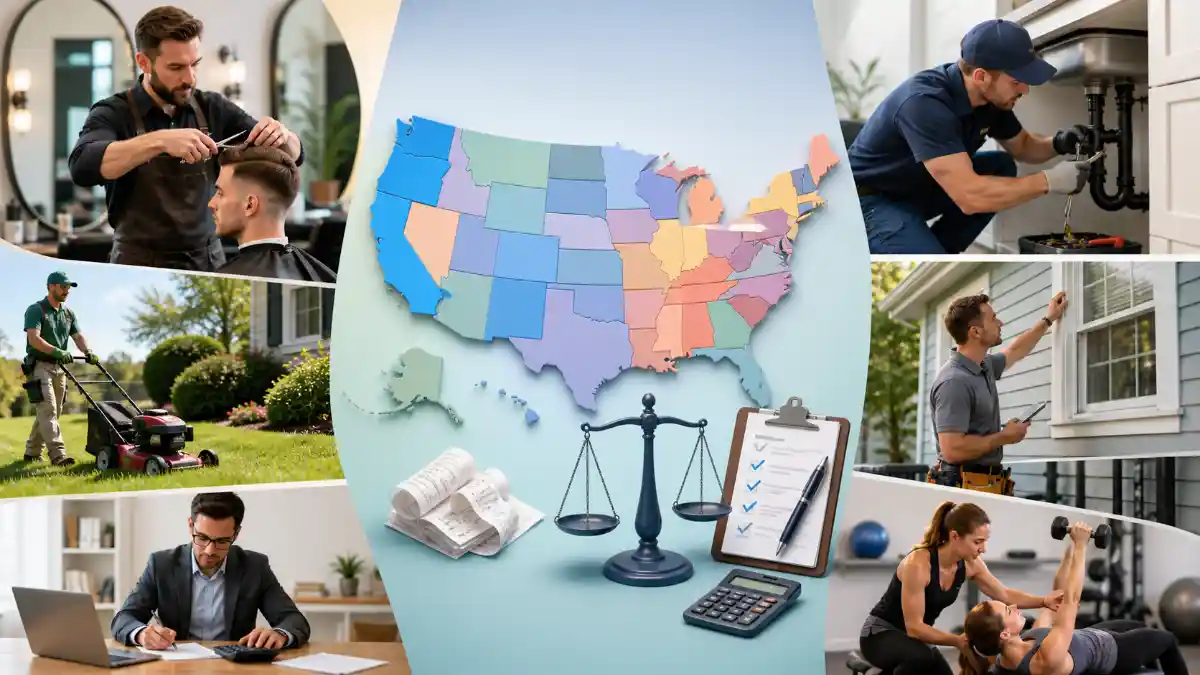
La Regola Base — Servizi vs Beni
Nella maggior parte degli stati USA, i beni materiali (proprietà personale tangibile) sono tassabili per impostazione predefinita — paghi la tassa di vendita a meno che lo stato non esenti specificamente l'articolo. I servizi funzionano in modo esattamente opposto nella maggior parte degli stati: i servizi sono esenti per impostazione predefinita e tassabili solo quando lo stato enumera specificamente quel tipo di servizio nel proprio codice fiscale.
Esistono quattro gruppi distinti di stati in materia di tassabilità dei servizi. Il primo gruppo — cinque stati — non ha alcuna tassa di vendita (Alaska, Delaware, Montana, New Hampshire, Oregon): nulla è tassato, compresi i servizi. Il secondo gruppo — quattro stati — tassa i servizi per impostazione predefinita con poche esenzioni: Hawaii, New Mexico, South Dakota e West Virginia tassano ampiamente la maggior parte dei servizi salvo specifiche esenzioni. Il terzo gruppo — il più numeroso — comprende 41 stati e il DC dove i servizi sono esenti per impostazione predefinita ma specifici servizi enumerati sono tassabili. La quarta considerazione: anche all'interno di questi 41 stati, ogni stato tassa un insieme diverso di servizi, creando un'enorme variazione.
Il risultato è un mosaico in cui un taglio di capelli è tassabile nello stato di Washington (servizio di cura personale tassato) ma esente in Ohio (non enumerato). Il taglio dell'erba è tassabile nella maggior parte degli stati ma è stato riclassificato come non tassabile in Indiana a partire dal 1° gennaio 2026. La manodopera per la riparazione dell'auto è tassabile in molti stati ma solo i ricambi sono tassabili in altri. I servizi legali sono esenti praticamente ovunque — così come la maggior parte dei servizi contabili e medici — perché i gruppi di servizi professionali hanno fatto pressione con successo per esenzioni nella maggior parte dei parlamenti statali.
Punti Chiave
- I servizi sono esenti per impostazione predefinita in 41 stati — tassabili solo se specificamente enumerati nella legge statale.
- 4 stati tassano i servizi ampiamente per impostazione predefinita: Hawaii, New Mexico, South Dakota e West Virginia.
- I 5 stati NOMAD (AK, DE, MT, NH, OR) non hanno tassa di vendita — i servizi non sono mai tassati.
- I servizi professionali (legale, contabile, medico, architettonico) sono esenti in quasi ogni stato.
- I servizi di riparazione su proprietà tangibile (riparazione auto, riparazione elettrodomestici) sono tassabili in molti stati — ma solo la manodopera, non i ricambi, in alcuni.
- I servizi di giardinaggio e paesaggistica sono tassabili nella maggior parte degli stati — l'Indiana li ha riclassificati come non tassabili nel 2026.
- I servizi di cura personale (tagli di capelli, centri estetici, massaggi) sono tassabili nello stato di Washington, South Dakota, West Virginia e in diversi altri.
- Il DC ha aumentato l'aliquota sui servizi tassabili dal 6% al 7% a partire dal 1° ottobre 2026.
- Il SaaS (Software as a Service) è tassabile in 24 stati — un'area in rapida espansione della tassazione dei servizi.
- Raggruppare un servizio tassabile con un servizio esente in un'unica fattura può rendere l'intero importo tassabile in molti stati.
Sei Categorie di Servizi Tassabili
Sebbene nessuno stato tassi esattamente gli stessi servizi, i servizi tassati si suddividono in sei grandi categorie. Capire a quale categoria appartiene un servizio è il primo passo per determinare se è probabilmente tassabile nel tuo stato.
| Categoria | Esempi | Generalmente Tassabile In | Generalmente Esente In |
|---|---|---|---|
| 1. Servizi su Proprietà Personale Tangibile | Riparazione auto, elettrodomestici, computer, sartoria, lavanderia, pulizia gioielli | Maggior parte degli stati — ampiamente tassato | Meno stati — spesso solo la manodopera è esente se indicata separatamente |
| 2. Servizi su Proprietà Immobiliare | Giardinaggio, paesaggistica, pulizie, verniciatura, disinfestazione | Molti stati inclusi TX, FL, WA | Indiana (modifica regola 2026), CA, maggior parte stati NE |
| 3. Servizi Personali | Taglio capelli, centri estetici, massaggi, abbronzatura, tatuaggi, toelettatura animali | WA, SD, WV, HI, NM, alcuni altri | Maggior parte degli stati — NJ esenta esplicitamente barbieri e istituti di bellezza |
| 4. Divertimento e Ricreazione | Biglietti cinema, concerti, parchi divertimenti, eventi sportivi, golf, abbonamenti palestra | Maggior parte degli stati tassa gli ingressi | Varia — alcuni stati esonerano organizzazioni non profit o determinati eventi |
| 5. Servizi Aziendali | Elaborazione dati, SaaS, credit reporting, pubblicità, centralini telefonici, disinfestazione | TX (elaborazione dati 80%), NY (SaaS), NJ (SaaS), WA | CA (SaaS esente), FL (SaaS esente), maggior parte stati per consulenza professionale |
| 6. Servizi Professionali | Servizi legali, contabilità, medicina, odontoiatria, architettura, ingegneria | SD, WV, HI, NM (in alcune forme) | Praticamente ogni altro stato — la maggior parte esenta i servizi professionali |
I servizi legali, contabili, medici e architettonici sono esenti dalla tassa di vendita in quasi ogni stato USA — non per una logica fiscale di principio, ma perché le associazioni di professionisti (ordini degli avvocati, società di CPA, associazioni mediche) hanno fatto pressione con successo sui parlamenti statali per ottenere esenzioni nel corso di decenni. Questo crea la situazione alquanto incoerente in cui un taglio di capelli — un servizio personale — è tassabile nello stato di Washington, mentre la consulenza legale — un servizio spesso riservato a clienti benestanti — è esente. La Tax Foundation ha rilevato questa incoerenza nella sua analisi delle basi fiscali statali: i servizi professionali dovrebbero essere inclusi in una tassa di vendita ampia e neutrale, ma l'influenza politica li ha mantenuti esenti nella grande maggioranza degli stati. Per i consumatori, questo significa che i servizi di avvocati, commercialisti, medici e architetti sono quasi sempre privi di tassa di vendita indipendentemente dallo stato.
Formula Inversa — Verifica una Fattura di Servizi
Quando un fornitore di servizi ti addebita la tassa di vendita, usa la formula inversa per verificare se è stata applicata l'aliquota corretta sulla parte corretta della fattura — soprattutto per fatture che includono sia componenti tassabili che esenti.
Esempio: Una fattura di riparazione auto in Texas mostra $280 manodopera + $195 ricambi + $16,09 di tassa. Aliquota combinata Texas 8,25%. Dividi: $16,09 ÷ 0,0825 = $195,03 ≈ $195 (solo ricambi). La manodopera è stata correttamente esentata in Texas dove la manodopera di riparazione indicata separatamente non è tassabile — solo i ricambi. Se la base tassabile implicita avesse mostrato $475 (manodopera + ricambi), il meccanico avrebbe applicato erroneamente la tassa anche sulla manodopera.
Passo dopo Passo: Come Determinare se un Servizio è Tassabile
Reverse Sales Tax Calculator
Calcolatore inverso di tasse 2026 — Funziona per tutti i 50 stati USA. Rimuovi le tasse da qualsiasi totale istantaneamente.
Scenari Reali di Tassazione dei Servizi
Scenario 1: Taglio di Capelli — Tassabile a Washington, Esente in Ohio
Situazione
Due persone pagano ciascuna $60 per un taglio di capelli. Una è a Seattle, Washington (aliquota combinata 10,25%). L'altra è a Columbus, Ohio (aliquota combinata ~7,5%).
Stato di Washington: I servizi di cura personale — tagli di capelli, centri estetici, abbronzatura — sono esplicitamente tassabili. $60 × 10,25% = $6,15 di tassa di vendita. Totale: $66,15.
Ohio: I tagli di capelli e i servizi di cura personale non sono enumerati come tassabili in Ohio. Il servizio è esente. Totale: $60,00 — nessuna tassa di vendita.
Impatto annuale: Una persona che si taglia i capelli mensilmente a Seattle a $60 ciascuno paga $6,15 × 12 = $73,80 all'anno di tassa di vendita sui tagli di capelli. La stessa persona a Columbus paga $0.
Verifica inversa (Washington): $6,15 ÷ 0,1025 = $60,00 ✓ — l'intero importo del servizio è correttamente tassato in WA.
Scenario 2: Riparazione Auto — Ricambi Tassabili, Manodopera Esente (Texas)
Situazione
Un proprietario di auto in Texas fa riparare la propria vettura. Fattura: Manodopera $280,00, Ricambi $195,00. Aliquota combinata Texas nella sua città: 8,25%.
Regola Texas: La manodopera di riparazione su proprietà personale tangibile è generalmente esente da tassa di vendita quando indicata separatamente. I ricambi (beni tangibili) sono tassabili all'aliquota piena.
Tassabile: Solo ricambi — $195,00 × 8,25% = $16,09
Esente: Manodopera $280,00 — $0 di tassa
Totale fattura: $280 + $195 + $16,09 = $491,09
Se anche la manodopera fosse stata erroneamente tassata: ($280 + $195) × 8,25% = $475 × 8,25% = $39,19 — sovraccarico di $23,10
Verifica inversa: $16,09 ÷ 0,0825 = $195,03 ≈ $195 (solo ricambi) ✓
Regola chiave: Verifica sempre che la fattura di riparazione auto indichi separatamente manodopera e ricambi. Se raggruppati in un'unica voce, molti stati tasseranno l'intero importo inclusa la manodopera.
Scenario 3: Giardinaggio — Modifica della Regola Indiana 2026
Situazione
Un proprietario di casa in Indiana assume un'azienda di giardinaggio per la concimazione e il trattamento con erbicidi. Fattura totale $180. Aliquota Indiana: 7%.
Prima del 2026: I servizi di giardinaggio in Indiana erano considerati tassabili perché l'applicazione di prodotti chimici era vista come coinvolgente proprietà personale tangibile (i prodotti chimici). Tassa: $180 × 7% = $12,60.
Dal 1° gennaio 2026: L'Indiana ha aggiornato le proprie linee guida — i servizi di applicazione per giardinaggio sono ora classificati come non tassabili perché l'oggetto principale della transazione è il servizio stesso, non i prodotti chimici applicati. Il test "oggetto principale" ha stabilito che i prodotti chimici sono accessori al servizio. Tassa: $0.
Risparmio dalla modifica della regola 2026: $12,60 su un singolo servizio. Un proprietario con 8 interventi di giardinaggio all'anno risparmia $12,60 × 8 = $100,80 all'anno.
Importante: Se hai ricevuto una fattura di giardinaggio in Indiana nel 2026 con il 7% di tassa di vendita e il servizio era pura applicazione (non noleggio attrezzature o vendita di prodotti), l'addebito potrebbe non essere corretto secondo le nuove linee guida 2026. Contatta il fornitore con la nuova disposizione dell'Indiana DOR.
Scenario 4: Abbonamento SaaS — Tassabile a New York, Esente in California
Situazione
Un'azienda si abbona a uno strumento SaaS di gestione progetti da $200/mese. Un team è a New York City (8,875% combinato). Un altro team è a San Francisco (9,50% combinato).
New York: Il SaaS e il software preconfezionato sono tassabili come proprietà personale tangibile. $200 × 8,875% = $17,75 di tassa. Totale mensile: $217,75.
California: Il SaaS è esente perché non cambia proprietà tangibile — è un servizio remoto. Tassa = $0. Totale mensile: $200,00.
Differenza annuale: $17,75 × 12 = $213 in più all'anno per lo stesso abbonamento SaaS a New York rispetto alla California — puramente dovuta alla classificazione statale del software cloud.
Regola parziale Texas: Il Texas tassa l'80% dei costi SaaS come "elaborazione dati." All'8,25% su 80% di $200 = $160 tassabili × 8,25% = $13,20/mese — tra NY e CA per costo.
Tassabilità dei Servizi Stato per Stato — Regole Chiave (2026)
La tabella seguente copre le regole più importanti sulla tassabilità dei servizi per i principali stati — concentrandosi sui servizi che consumatori e piccole imprese incontrano più comunemente: cura personale, servizi di riparazione, giardinaggio, servizi professionali e servizi digitali.
| Stato | Cura Personale (Parrucchieri, ecc.) | Servizi di Riparazione | Giardinaggio / Immobile | Servizi Professionali (Legale, Contabile) | SaaS / Servizi Digitali |
|---|---|---|---|---|---|
| Alabama | Limitato | Tassabile (riparazione TPP) | Esente (maggior parte) | Esente | Tassabile (software preconfezionato) |
| Arizona | Tassabile (intrattenimento) | Tassabile (riparazione TPP) | Tassabile (paesaggistica commerciale) | Esente | Tassabile in alcune forme |
| California | Esente | Tassabile — solo ricambi (manodopera esente se indicata separatamente) | Esente | Esente | Esente (SaaS = servizio non tassabile) |
| Colorado | Esente | Tassabile (riparazione TPP) | Esente | Esente | Tassabile (archiviazione/cloud computing) |
| Connecticut | Tassabile | Tassabile (riparazione TPP) | Tassabile (giardinaggio) | Esente (maggior parte professionali) | Tassabile all'1% per uso aziendale |
| Florida | Esente | Tassabile (riparazione TPP) | Tassabile (giardinaggio commerciale) | Esente | Esente (SaaS non tassabile) |
| Georgia | Esente | Tassabile (riparazione TPP) | Esente (maggior parte) | Esente | Tassabile (elaborazione dati) |
| Hawaii | Tassabile (GET su tutto) | Tassabile (GET) | Tassabile (GET) | Tassabile (GET) | Tassabile (GET) |
| Illinois | Esente | Tassabile (solo ricambi) | Esente | Esente | Tassabile (cloud computing) |
| Indiana | Esente | Tassabile (riparazione TPP) | Esente (modifica regola 2026) | Esente | Esente (SaaS non tassabile) |
| Maryland | Esente | Tassabile (riparazione TPP) | Tassabile (giardinaggio) | Esente | Tassabile (pubblicità digitale; SaaS dipende) |
| Massachusetts | Esente | Tassabile (riparazione TPP) | Esente | Esente | Tassabile (SaaS tassabile) |
| Michigan | Esente | Tassabile (riparazione TPP) | Esente | Esente | Tassabile (software preconfezionato) |
| Minnesota | Tassabile (maggior parte cura personale) | Tassabile (riparazione TPP) | Tassabile (giardinaggio) | Esente (maggior parte) | Tassabile (SaaS tassabile) |
| New Jersey | Esente (barbieri e istituti di bellezza esplicitamente esenti) | Tassabile (riparazione TPP) | Tassabile (giardinaggio) | Esente | Tassabile (SaaS, elaborazione dati) |
| New Mexico | Tassabile (GRT) | Tassabile (GRT) | Tassabile (GRT) | Tassabile (GRT — maggior parte servizi) | Tassabile (GRT) |
| New York | Esente (barbieri, bellezza generalmente esenti) | Tassabile (riparazione TPP) | Tassabile (giardinaggio, paesaggistica) | Esente | Tassabile (SaaS come software) |
| North CarolinaNorth Carolina Sales Tax: 4.75% | Esente | Tassabile (servizi RMI) | Tassabile (giardinaggio commerciale) | Esente | Tassabile (audio/video digitale) |
| Ohio | Esente | Tassabile (riparazione TPP) | Tassabile (oltre soglia $5.000) | Esente | Tassabile (servizi di informazioni elettroniche) |
| Pennsylvania | Esente | Tassabile (riparazione TPP) | Esente | Esente | Tassabile (elaborazione informatica) |
| South Dakota | Tassabile (maggior parte servizi) | Tassabile | Tassabile | Tassabile (maggior parte professionali) | Tassabile |
| Tennessee | Esente | Tassabile (riparazione TPP) | Tassabile (commerciale) | Esente | Tassabile (SaaS tassabile) |
| Texas | Esente | Tassabile (ricambi) / Esente (manodopera se separata) | Tassabile (giardinaggio oltre $5.000/anno autonomo) | Esente (contabilità, legale, medico) | Tassabile — 80% del SaaS come elaborazione dati |
| Virginia | Esente | Tassabile (riparazione TPP) | Tassabile (giardinaggio commerciale) | Esente | Tassabile in alcune forme |
| Washington | Tassabile (cura personale, tagli capelli) | Tassabile (riparazione TPP) | Tassabile (giardinaggio, paesaggistica) | Esente (maggior parte professionali) | Tassabile (beni digitali) |
| West Virginia | Tassabile (maggior parte servizi) | Tassabile | Tassabile | Tassabile (alcuni professionali) | Tassabile |
| Wisconsin | Esente | Tassabile (riparazione TPP) | Tassabile (giardinaggio, paesaggistica) | Esente | Tassabile (software preconfezionato) |
| DC | Tassabile | Tassabile | Tassabile | Esente (maggior parte) | Tassabile — aliquota in aumento al 7% dal 1° ott. 2026 |
Fonti: Avalara, TaxJar, TaxHero, HandsOffSalesTax, siti DOR statali — aprile 2026. Le regole cambiano frequentemente — verifica con il DOR del tuo stato prima di utilizzare queste informazioni per la conformità aziendale.
Servizi Tassabili vs Esenti — Esempi Comuni
| Servizio | Tassabile In | Esente In | Regola Chiave |
|---|---|---|---|
| Taglio capelli / salone | WA, SD, WV, HI, NM, MN, CT, AZ | NY, NJ, CA, OH, FL, TX, PA | NJ esenta esplicitamente barbieri e istituti di bellezza per nome |
| Riparazione auto (manodopera) | TX (se non indicata separatamente), FL, GA | TX (se indicata separatamente), CA (solo ricambi tassabili), IN | L'indicazione separata della manodopera è fondamentale — raggruppata = spesso tassabile |
| Taglio erba | TX, FL, WA, MN, NJ, MD, WI, TN | IN (2026), CA, PA, IL | Regola Indiana cambiata il 1° gennaio 2026 — era tassabile, ora esente |
| Servizi legali | SD, WV, HI, NM | Tutti gli altri stati con tassa di vendita | Servizi degli avvocati esenti in 41+ stati — lunga storia di lobbying riuscito |
| Contabilità / CPA | SD, WV, HI, NM | Tutti gli altri stati con tassa di vendita | Servizi contabili e di preparazione fiscale esenti in praticamente tutti gli stati eccetto quelli a base ampia |
| Idraulica / HVAC | FL, TX (commerciale), WA | Maggior parte degli stati — i miglioramenti di capitale su beni immobili spesso esenti | La distinzione tra nuova costruzione e riparazione è importante — la nuova installazione è spesso un miglioramento di capitale (esente), la riparazione dell'esistente è tassabile |
| Abbonamento SaaS | NY, TX (80%), MA, MN, TN, WA, WI, NJ, CT | CA, FL, IN, KS, VA (alcuni) | 24 stati tassano il SaaS in qualche forma — area in più rapida crescita della tassazione dei servizi |
| Abbonamento palestra | WA, SD, WV, CT, NY (club fitness tassabili) | Maggior parte degli stati — i servizi fitness non sono enumerati | Gli ingressi (lezione specifica, evento) spesso tassabili anche quando gli abbonamenti non lo sono |
| Biglietto cinema | Maggior parte degli stati — gli ingressi sono ampiamente tassabili | NY (esente), alcune proiezioni di enti non profit | Le tasse sugli spettacoli/ingressi sono tra le più ampiamente applicate sui servizi |
| Servizi medici | HI, NM (in alcune forme) | Tutti gli altri stati con tassa di vendita | Servizi medici e odontoiatrici universalmente esenti al di fuori degli stati a base ampia |
La Divisione Manodopera vs Materiali — Fondamentale per le Fatture di Servizi
Quando l'Indicazione Separata della Manodopera Risparmia la Tassa
- Riparazione auto in Texas: manodopera indicata separatamente = manodopera esente, ricambi tassabili. Raggruppati: l'intero importo può essere tassabile
- Servizi di installazione in California: la manodopera per l'installazione è esente quando indicata separatamente — solo i beni installati sono tassabili
- Maggior parte degli stati: le fatture degli appaltatori che mostrano separatamente la manodopera esente e i materiali tassabili proteggono la manodopera dalla tassa — le fatture raggruppate spesso portano alla tassazione dell'intero importo
- New Jersey: i servizi di consulenza fatturati separatamente sono esenti; solo il canone di accesso SaaS è tassabile — raggruppati = intero importo potenzialmente tassabile
- North Carolina: servizi di riparazione, manutenzione e installazione — manodopera tassabile se venduta con i ricambi salvo separazione
- Chiedi sempre ai fornitori di servizi che ti fatturano sia servizi che materiali di indicare separatamente ogni componente — la maggior parte dei fornitori professionali lo fa automaticamente
Attenzione: Il Raggruppamento Può Rendere Tassabili Servizi Esenti
- Combinare un servizio professionale esente (consulenza) con SaaS tassabile in un'unica voce di fattura può rendere l'intero importo tassabile in NJ, TX e altri stati
- La nuova esenzione indiana per il giardinaggio 2026 richiede che la transazione sia principalmente un servizio — se i prodotti chimici sono fatturati separatamente come prodotti, possono rimanere tassabili
- La soglia di $5.000 dell'Ohio per il giardinaggio significa che una volta che un appaltatore supera $5.000 di fatturato annuo in paesaggistica, TUTTE le vendite successive sono tassabili — non c'è modo di tornare sotto la soglia per quell'anno
- Se un appaltatore fornisce sia riparazioni tassabili che costruzioni esenti in un unico progetto, l'intero contratto può essere trattato come la categoria tassabile se non correttamente documentato
- SaaS con implementazione e formazione raggruppati in un unico prezzo: l'implementazione può essere esente ma il pacchetto rende tutto potenzialmente tassabile in molti stati
- Evita contratti di servizio "tutto incluso" negli stati con tassabilità parziale dei servizi — chiedi sempre fatture dettagliate
Consiglio dellÉsperto — Ritu Sharma
"L'errore fiscale sui servizi che porta maggiori risparmi ai consumatori quando viene corretto è la fattura raggruppata di riparazione auto in Texas e California. Ho esaminato centinaia di fatture di officine di questi stati dove l'officina ha fatturato un addebito combinato — 'Servizio di Riparazione: $475' — e ha tassato l'intero $475. In Texas, la manodopera indicata separatamente è esente dalla tassa di vendita; solo i ricambi sono tassabili. Su una fattura da $475 che è al 60% manodopera ($285) e al 40% ricambi ($190), la tassa corretta è $190 × 8,25% = $15,68. La tassa errata raggruppata è $475 × 8,25% = $39,19 — un sovraccarico di $23,51 su una singola visita. Moltiplicato per tutte le riparazioni che una famiglia texana fa in un anno — cambi olio, rotazione pneumatici, freni, servizio AC — il sovraccarico annuale può facilmente raggiungere $100-$200. La soluzione: quando vai a ritirare la tua auto, prima di pagare, chiedi all'addetto al servizio di dividere la fattura in voci separate per manodopera e ricambi. Qualsiasi officina rispettabile può farlo in 60 secondi nel loro sistema. Se addebitano un'aliquota combinata con tassa sull'intero importo dopo che hai chiesto voci separate, vale la pena procedere — è un problema di conformità noto e la maggior parte dei manager di officina lo correggerà immediatamente."
Chi Deve Capire la Tassabilità dei Servizi?
- Piccoli imprenditori che acquistano servizi — un'azienda che assume uno strumento SaaS, un servizio di giardinaggio, un'impresa di pulizie o un servizio di riparazione IT deve sapere se il fornitore applica o esenta correttamente la tassa di vendita. In stati come New York (SaaS tassabile) o Texas (elaborazione dati tassabile all'80%), essere addebitati per un abbonamento SaaS aziendale è corretto — ma in California o Florida, lo stesso addebito SaaS dovrebbe avere zero tassa. Gli addebiti errati rappresentano un sovrapagamento (tassa overcharged su servizio esente) o una potenziale responsabilità per use tax (non addebitata quando si sarebbe dovuta)
- Clienti di riparazioni auto in stati con esenzioni sulla manodopera — sapere che Texas, California e diversi altri stati esentano la manodopera di riparazione indicata separatamente significa che i consumatori possono controllare la fattura della riparazione auto prima di pagare. Se la fattura raggruppa manodopera e ricambi in un'unica voce e tassa l'intero importo, chiedere all'officina di elencarli separatamente può eliminare la tassa di vendita sulla manodopera — un risparmio legittimo e spesso significativo su una grande riparazione
- Proprietari di case in Indiana con servizi di giardinaggio — la modifica della regola del 1° gennaio 2026 ha riclassificato i servizi di applicazione per il giardinaggio (fertilizzanti, erbicidi) come non tassabili in Indiana. I proprietari che hanno ricevuto fatture di giardinaggio in Indiana nel 2026 con il 7% di tassa di vendita su servizi di applicazione dovrebbero contattare il loro fornitore di giardinaggio riguardo alle linee guida aggiornate
- Aziende che acquistano abbonamenti SaaS e cloud — con 24 stati che ora tassano il SaaS in qualche forma, la questione se gli abbonamenti SaaS siano correttamente tassati è sempre più importante. New York e MassachusettsMassachusetts Sales Tax: 6.25% tassano il SaaS ad aliquote piene. Il Texas tassa l'80% dell'addebito. Il Connecticut tassa all'1% per uso aziendale. California e Florida lo esentano. Se la tua azienda è in uno stato tassabile e il tuo fornitore SaaS non riscuote la tassa, potresti tecnicamente dover pagare la use tax su tali abbonamenti
- Proprietari di attività di servizi che fatturano ai clienti — capire quali dei tuoi servizi sono tassabili in ogni stato in cui si trovano i tuoi clienti determina se devi riscuotere e versare la tassa di vendita sulle tue fatture. Un consulente che fornisce consulenza gestionale nella maggior parte degli stati non deve tassa di vendita. Un consulente che fornisce anche una piattaforma SaaS o un servizio di elaborazione dati può dover tassa su tali componenti negli stati in cui sono tassabili
- Residenti dello stato di Washington — Washington è uno degli stati con tassazione dei servizi più ampia, tassando servizi di cura personale (tagli di capelli, centri estetici), giardinaggio, pulizie, servizi di riparazione e servizi di fitness. I residenti di Washington dovrebbero verificare che i loro fornitori applichino correttamente l'aliquota combinata del 10,25% di Seattle o l'aliquota locale applicabile a tutti i servizi tassabili
L'azione più efficace che un consumatore può compiere per la tassa sui servizi è richiedere una fattura dettagliata che indichi separatamente manodopera, materiali e diversi tipi di servizio. Stato dopo stato, la distinzione tra indicazione separata e raggruppamento determina se la manodopera è esente o tassabile. Un'officina auto in Texas che raggruppa "$475 riparazione" in un'unica voce deve spesso tassare l'intero $475. La stessa officina che mostra "$280 manodopera / $195 ricambi" può esentare i $280 di manodopera, tassando solo i $195 di ricambi — risparmiando $23,10 all'8,25%. Si tratta di ottimizzazione fiscale legale — non stai chiedendo all'officina di rappresentare falsamente nulla, semplicemente di categorizzare correttamente ciò che stai pagando. Analogamente, per fatture miste che includono sia servizi tassabili che esenti — SaaS più consulenza, o giardinaggio più servizi di progettazione — richiedere che la fattura prezzi separatamente ogni componente può preservare l'esenzione sulla parte esente. Chiedi a ogni fornitore di servizi che ti fattura sia servizi che materiali se possono indicare separatamente ogni componente. La maggior parte lo farà, e in molti stati cambia significativamente il conto fiscale.
Modifiche Recenti e Rischi Chiave nel 2026
Modifica della regola indiana 2026 sul giardinaggio: Dal 1° gennaio 2026, l'Indiana ha riclassificato i servizi di applicazione per il giardinaggio (concimi, erbicidi, pesticidi) come non tassabili, applicando il test "oggetto principale" per determinare che lo scopo principale di tali transazioni è il servizio, non i prodotti chimici. Questo può estendersi alla pulizia di piscine, disinfestazione e rimozione della neve. I fornitori di giardinaggio in Indiana che addebitavano il 7% sui servizi di applicazione dovrebbero aggiornare le loro fatture; i proprietari di case dovrebbero controllare le fatture 2026 e richiedere rimborsi per addebiti fiscali non corretti.
Aumento aliquota DC al 7% per servizi tassabili: L'aliquota fiscale di vendita di Washington DC sui servizi tassabili aumenterà dal 6% al 7,0% a partire dal 1° ottobre 2026. Il DC tassa un'ampia gamma di servizi. Aziende e consumatori nel DC dovranno aspettarsi fatture più alte per i servizi nel quarto trimestre 2026.
Espansione digitale Maine 2026: Dal 1° gennaio 2026, il Maine ha aggiunto i lavori audiovisivi digitali e le opere audio digitali alla propria definizione di servizi tassabili. Ciò include abbonamenti in streaming e tariffe per piattaforme come Netflix, Hulu, Spotify, Apple Music, e abbonamenti ad audiolibri e podcast. I consumatori del Maine che in precedenza non vedevano la tassa su questi abbonamenti dovrebbero ora vedere applicata l'aliquota Maine.
Modifiche Ohio 2026: Il disegno di legge di bilancio dell'Ohio ha abrogato il rimborso parziale del 25% della tassa di vendita pagata dai fornitori di servizi di informazioni elettroniche, aumentando potenzialmente il costo effettivo di certi servizi digitali in Ohio. L'Ohio ha anche abrogato l'esenzione per i veicoli a motore noleggiati forniti ai proprietari le cui auto sono in riparazione — una modifica che riguarda le pratiche delle auto sostitutive dei concessionari.
La tendenza all'espansione del SaaS: Il numero di stati che tassano il SaaS è cresciuto da poche unità un decennio fa ad approximately 24 stati al 2026. Questa tendenza continua poiché gli stati riconoscono la crescente quota di spesa aziendale per software cloud e cercano di applicare i loro framework fiscali esistenti su beni di servizio o digitali a questi abbonamenti. Le aziende che utilizzano software cloud dovrebbero periodicamente rivedere le fatture dei fornitori per verificare se la tassa di vendita viene correttamente applicata o omessa in ogni stato in cui hanno dipendenti o nexus.
Analisi degli Esperti e Impatto sul Mercato
La tassazione dei servizi rappresenta il divario strutturale più significativo nella maggior parte dei sistemi statali di tassa di vendita degli USA. La Tax Foundation stima che estendere le tasse di vendita alla maggior parte dei servizi ai consumatori consentirebbe agli stati di ridurre sostanzialmente le loro aliquote standard di tassa di vendita mantenendo entrate equivalenti — perché l'economia dei servizi non tassata rappresenta ora la maggior parte della spesa dei consumatori nella maggior parte degli stati. Ma la resistenza politica da parte di gruppi di lobbying dei servizi professionali (ordini degli avvocati, associazioni mediche, organizzazioni di CPA) ha bloccato con successo una tassazione più ampia dei servizi nella maggior parte dei parlamenti statali per decenni.
L'area di espansione più attiva è quella dei servizi digitali. Gli stati che faticavano a tassare lo streaming, il software cloud e il SaaS nell'ambito dei tradizionali framework fiscali sulle proprietà tangibili hanno riclassificato aggressivamente questi servizi come "beni digitali" tassabili, "servizi di elaborazione dati" o "software fornito elettronicamente" per catturare entrate dall'economia digitale in crescita. L'espansione del Maine nel 2026 agli abbonamenti in streaming e l'aumento dell'aliquota del DC sui servizi tassabili fanno entrambi parte di questa più ampia tendenza nazionale.
Per i consumatori, l'impatto pratico della tassabilità dei servizi varia enormemente da stato a stato. Un residente dello stato di Washington che acquista servizi di cura personale, servizi di pulizia, giardinaggio e abbonamenti in palestra paga la tassa di vendita su tutti — a un'aliquota combinata che può superare il 10% a Seattle. Un residente della California che fa gli stessi acquisti non paga alcuna tassa di vendita — quei servizi non sono tassati in California. Nel corso di un anno di tipica spesa familiare per servizi, questa differenza può facilmente superare $500 di onere fiscale annuale.
Verdetto Finale
I servizi non sono tassabili per impostazione predefinita in 41 stati USA — sono tassabili solo quando uno stato enumera specificamente quel tipo di servizio nel proprio codice fiscale. Quattro stati (Hawaii, New Mexico, South Dakota, West VirginiaWest Virginia Sales Tax: 6.00%) tassano la maggior parte dei servizi ampiamente. I cinque stati NOMAD non hanno tassa di vendita su nulla. I servizi professionali — legale, contabile, medico — sono esenti in praticamente ogni stato. I servizi di riparazione su proprietà tangibile, il giardinaggio e i servizi di cura personale sono tassabili in molti stati ma esenti in altri.
L'azione pratica più importante per il consumatore: chiedi sempre fatture dettagliate che indichino separatamente manodopera, materiali e diversi tipi di servizio. Negli stati che esentano la manodopera di riparazione quando indicata separatamente (Texas, California, Indiana), questa semplice richiesta può eliminare una parte significativa della tassa nella fattura del servizio. Usa la formula inversa per verificare qualsiasi fattura di servizi: Tassa Addebitata ÷ Aliquota Combinata = Importo Tassabile Implicito. Confronta con ciò che ritieni dovrebbe essere tassabile e fai domande quando i numeri non corrispondono.